Can Dogs Have Milk? A Spill-and-Snack Safety Guide For Families With Curious Dogs
When dogs live alongside families, spills, and curious snouts, are bound to happen. If you’re here because your pup found someone’s unattended milk or cereal bowl, I’ve got a full guide for you on what to do next. Here’s a straightforward look at milk, dairy, and how to keep snack-hunter pups safe during everyday family life.
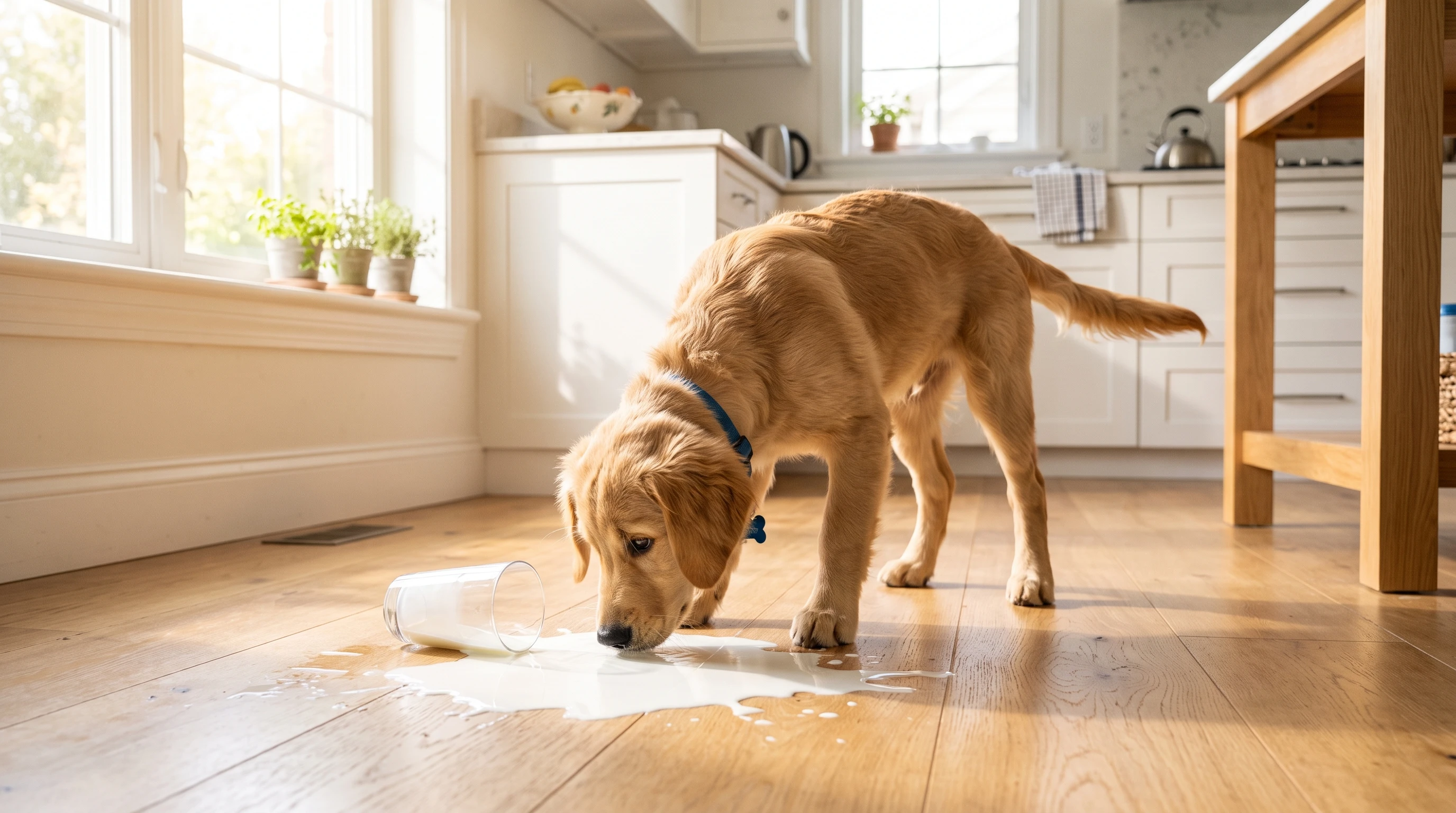
First Step: What Kind and How Much Milk Did the Dog Drink?
I always start with figuring out what exactly the dog got into. Not all milk and dairy are the same, and a dog’s reaction can slide from a mild tummy ache to something more serious depending on ingredients or amount.
- Plain cow’s milk, a small sip or few licks: Most adult dogs tolerate a tiny amount pretty well. Just keep an eye out for loose stool, excessive gas, a grumbly belly, vomiting, or diarrhea. Signs often show up within 12 hours.
- Large quantities, whole bowls, or repeated spills: Bigger servings raise the chances of digestive trouble. If you’ve got a small dog, a puppy, or a dog with past gut trouble, even a modest bowl can tip the scales. Remove any more dairy, set out extra water, and watch for symptoms. Persistent diarrhea, vomiting, or listlessness calls for a chat with your vet.
- Chocolate, coffee-flavored, sweetened, or sugarfree milk: These versions can include xylitol, chocolate, or caffeine, all of which are dangerous for dogs. If there’s any chance your dog drank milk with these ingredients, skip the home monitoring and call your vet or a pet poison-control service right away.
Why Many Dogs Don’t Handle Milk Well
Some people are surprised that plain milk is not toxic for dogs. However, most dogs lose the enzyme that breaks down lactose as they become adults. This means the sugar in milk isn’t digested well; not a poison, but it can leave them gassy, bloated, or with diarrhea. The American Kennel Club points out these reactions are pretty common, with some dogs tolerating dairy better than others, especially if they grew up getting small amounts.
What to Do If Your Dog Sneaks a Lot of Milk
- Check the label: Double-check for chocolate, xylitol, or sweeteners. If any show up, call the vet even if your dog acts fine. If it’s just plain cow’s milk, move to step two.
- Stop any more dairy treats: Don’t offer any more dairy until you see how your pup handles the first dose.
- Offer water: Make sure your dog has plenty of water on hand. Diarrhea can lead to dehydration pretty quickly, especially with smaller or older dogs.
- Monitor for symptoms: Keep an eye on your pup for anything unusual, such as loss of appetite, sudden accidents in the house, vomiting, or signs of belly pain like restlessness, whining, or hunching up. For dogs with digestive issues, chronic illnesses, or puppies, it’s a good idea to check in with your vet sooner rather than later.
- Call your vet if symptoms persist: If diarrhea or vomiting doesn’t fade out after a day, or if your dog seems really unwell, don’t hesitate to reach out for advice. Severe or ongoing symptoms can signal dehydration or a more serious problem.
What If the Milk Was Flavored, Sweetened, or Sugarfree?
This one needs fast action. Chocolate, xylitol (a sugarfree sweetener), and caffeine are all unsafe for dogs. Xylitol is often found in sugarfree treats and some yogurts, and chocolate can be found in chocolate milk or flavored coffee drinks. Even a small amount can cause a real emergency.
- Chocolate: Can lead to vomiting, diarrhea, restlessness, rapid breathing, or even seizures.
- Caffeine: Speeds up the heart rate and can trigger dangerous heart rhythms.
- Xylitol: Drops blood sugar rapidly and can damage the liver, even in small amounts. Look for this in labels for sugarfree, lowcalorie, or “keto” products.
If there’s any doubt, don’t wait for symptoms. Call the vet or the ASPCA Animal Poison Control Center (888-426-4435) right away.
Regular Dairy Beggars: Breaking Down Dog Dairy Choices
Some dogs really try their luck with dairy. If your dog begs for a lick of ice cream, cheese, or your milkshake, it’s helpful to know what’s safe and what isn’t. Here’s a quick comparison for families:
- Milk & Cream: Highest in lactose. Hardest for most dogs to digest, especially adult dogs.
- Cheese: Some cheeses, like cheddar or Swiss, are lower in lactose and a small cube can be less troublesome. Watch out for high salt/fat and added ingredients.
- Yogurt: Plain yogurt with live cultures is often handled better because bacteria help break down lactose. Look for plain, unsweetened options without xylitol or fruit chunks.
- Ice Cream: High in fat, sugar, and often includes chocolate or artificial sweeteners. Probably the worst dairy treat for dogs.
Dairy isn’t a necessary part of a dog’s diet. Fresh water covers all hydration needs, and treats are better left as dogformulated snacks. There are special lactosefree “dog milk” options if you really want to share a milky snack, but these are more about fun than nutrition.
Testing Dairy Tolerance: Safe Steps for Curious Families
- Ask your vet if your dog has known allergies, digestive issues, or chronic conditions. Some dogs with sensitive stomachs should skip the experiment entirely.
- Choose one dairy product (like plain, unsweetened yogurt or a spoonful of milk) and only offer a tiny amount; think a teaspoon for most dogs.
- Don’t try several kinds of dairy at once. Spacing out any new food is the safest route.
- Monitor for reactions. Loose stool, gassiness, vomiting, or skin irritation are signs that dairy isn’t a good fit.
- Keep notes. If you catch a pattern, share details with your vet.
Smart Gear to Prevent Sneaky Sips: Product Suggestions
- Spillresistant kids’ cups: These are super handy for younger children and reduce the chances of a milk puddle on the floor.
- Lidded cereal bowls: Kids and busy adults alike get distracted at breakfast, but covered bowls mean less cleanup (and fewer dog “snacks”).
- Pet gate: Blocking dog access to the kitchen during meals cuts down on temptation.
- Dogproof kitchen trash can: Lidded and sturdy cans keep leftovers, including cups and bowls, out of easy reach.
- Dogformulated lactosefree milk: If you just want the fun treat effect, some pet stores sell milk made especially for dogs. No lactose, low fat, and usually easier on sensitive bellies.
- Silicone dog treat mold: Great for freezing plain yogurt or dogsafe broth into easy treats for summer.
- Elevated water bowl: Encourages your dog to drink more water, which helps keep them hydrated and less interested in milky spills.
Common Questions from Curious Families
Here’s a quick FAQ to cover the most common worries I hear from other dog owners:
Can puppies have cow’s milk?
It’s not a great choice. Cow’s milk can cause diarrhea in puppies, who need either their mother’s milk or a vet-recommended puppy formula.
Can dogs drink lactosefree milk?
Lactosefree milk is less likely to upset your dog’s stomach, especially for adults. Still, serve only small amounts since the added sugars and fats aren’t ideal in big doses.
Can dogs have goat milk?
Some dogs digest goat milk a bit better because the fat and lactose levels are different than cow’s milk, but it’s still dairy and can trigger the same tummy troubles. Always start with tiny quantities and check for symptoms.
Can dogs drink almond or oat milk?
While almond or oat milk are dairyfree, some varieties have added sugars, xylitol, or other ingredients that aren’t good for dogs. Stick to plain, unsweetened versions if your vet approves, and give only a small taste.
What should I do if my dog drank chocolate milk?
Chocolate milk is an emergency. Call your vet or pet poison control right away. Don’t wait for symptoms.
Family Habits: BigPicture Milk Safety
Teaching your family to watch where they set down drinks and finish snacks at the table goes a long way in keeping furry family members out of trouble. Getting kids involved with meal cleanup (or finding fun, spillproof containers) helps everyone stay aware. And when accidents happen, because they always do, you’re ready to handle it calmly and keep your dog safe.
Curious about how to make your kitchen even more dogfriendly? Try using rugs with non-slip backing or designating a “kids only” counter where snacks and drinks are always out of paws’ reach. It’s a simple shift, but it makes life a little easier and safer for everyone. Building these habits now makes for happier, healthier dogs and a less stressful cleanup after family meals!
