Ten Minutes dog training routine for busy owners That Actually Fits a Full Schedule
If you have a dog and a full calendar, a ten-minute dog training routine is easier to keep than a long weekend session. The idea is to split the ten minutes into short pieces and attach each one to something you already do every day: the coffee brewing, the evening walk, the moment you get home.
This post covers everyday manners for any dog: coming when called, sitting politely, settling down and paying attention to you. If your dog has only just arrived, start with the first week with a new dog and come back here once the household has settled.
Why a ten-minute dog training routine beats an hour on the weekend
Dogs learn by repeating something that earned a reward. A sit that gets practiced thirty times across a week sticks better than a sit practiced fifty times on one Saturday, because the dog gets to try again after a break, sleep, and a normal day in between.
Attention is the other factor. Most dogs, especially puppies and young adults, tire of drills quickly. A session that ends while your dog is still keen leaves them looking forward to the next one. A session that runs until they are bored or frustrated teaches them that training is something to drift away from.
There is also the practical side. An hour you have to schedule gets skipped the first time the week gets busy. Three minutes beside the kettle gets done because you are standing there anyway, and doing it daily is what makes a dog reliable.
Split it up: three short sessions tied to your day
Aim for three sessions of about three minutes each, plus a minute of slack for treats and praise. Choose anchors that already happen without fail.
- Morning, while the coffee brews. Your dog is usually keen and a little hungry, which makes this a good session for learning something new. Work on the skill of the week.
- Midday or after work, when you walk through the door. Practice a calm greeting. Ask for a sit before you say hello, then reward it. This turns a daily excitement spike into a manners lesson.
- Evening, before or after the walk, or during a TV ad break. Review what your dog already knows and finish with settle, so the household winds down together.
A few ground rules keep the sessions short and useful:
- Stand somewhere with few distractions: the kitchen, the hallway, a quiet corner of the yard.
- Have treats ready before you call your dog, so you are not fumbling in a cupboard while they wait.
- Do five to ten repetitions, then stop. Three minutes passes faster than you expect.
- End on something your dog finds easy, so the last thing they feel is success.
If your week is unpredictable, you can swap anchors. The routine works as long as each session sits next to something that reliably happens.
The four basics worth your ten-minute dog training routine: name, sit, come, settle
These four skills cover most of daily life with a dog. Other tricks are fun, but these are the ones that make the house calmer and the walks safer.
Name: the attention skill
Say your dog’s name once in a cheerful voice. The moment they look at you, say “yes” and give a treat. Repeat. You are teaching one thing: when I hear my name, good things happen if I look at you. Use the name for this and not as a warning or a scolding, or it will lose its value.
Sit: the polite default
Hold a treat at your dog’s nose and slowly lift it just above their head. Most dogs lower their back end as they follow it. The moment their bottom touches the floor, say “yes” and reward. Once they do it reliably, add the word “sit” just before you lure. Later, ask for a sit before meals, before the door opens and before greetings.
Come: the safety skill
Start indoors, a few steps away. Say “come” in a bright voice, step back, and reward your dog when they reach you. Make arriving at your feet the best part of their day: a few treats in a row, or a quick game. Never use “come” to call your dog for something they dislike, such as a bath or the end of a walk. Walk over and fetch them for those.
Settle: the off switch
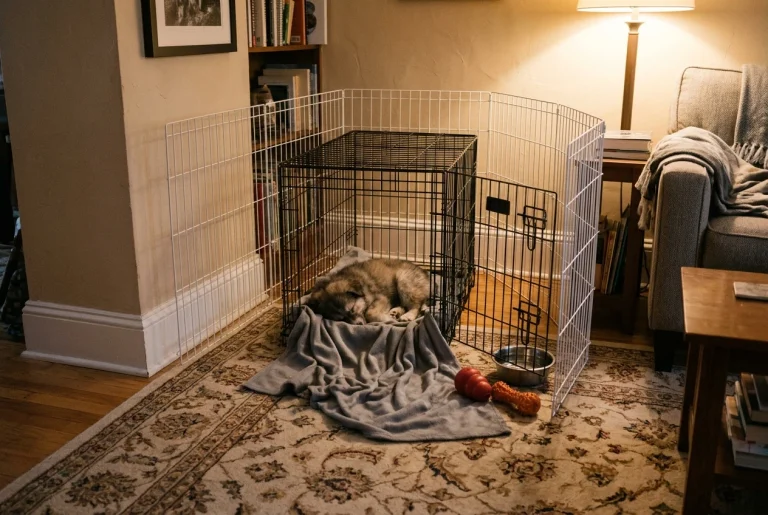
Put a mat or a blanket on the floor. When your dog steps on it, reward. When they lie down on it, reward again, and keep rewarding calmly while they stay there. Settle is often the skill busy families need most, because it gives the dog something to do while you cook or the kids do homework. If you are also working on confinement at night or while you are out, crate training a puppy when you work full days covers that separately.
A simple four-week plan so you never wonder what to practice
Choose one main focus per week, and spend the other sessions reviewing earlier skills. Here is a plan for the three daily sessions.
Week 1: name and sit. Use the morning session for name games and the other two for sit. Reward every correct response with a small treat. By the end of the week, your dog should look at you when you say their name and sit for a lure within a second or two.
Week 2: sit without the lure, and come indoors. Start asking for a sit with just the word and a hand signal, rewarding when they get it. Add “come” over short distances inside the house. Reward generously.
Week 3: settle, and come with more distance. Introduce the mat during the evening session. Move “come” to a longer hallway, then the yard on a long line if it is not securely fenced. Keep sit going at the door and at mealtimes.
Week 4: add distractions and real life. Practice sit and name while someone walks past, while a toy lies nearby, and at the start of a walk. Ask for a settle while the family eats. Mix everything together and use real-life rewards too, such as opening the door or throwing a toy.
After week four, rotate through all four skills, giving extra time to whichever is weakest. The routine then runs for as long as you like.
How to get the whole family using the same cues
A dog who hears “sit,” “sit down,” and “park it” for the same action will be confused, and a dog who is allowed on the sofa by one person and scolded by another will learn that rules depend on who is watching. Agree on a few things once and write them down.
- One word per skill. Put the list on the fridge: name, sit, come, settle. Add any hand signals you plan to use.
- One cue, said once. Repeating “sit, sit, sit” teaches the dog to wait for the third time. Say it once, wait a few seconds, and if nothing happens, help with a lure or make the task easier.
- Shared rules for rewards. Decide who hands out treats and when. Children can join in, but give them a small cup of treats and a simple job, such as asking for a sit before throwing a ball.
- Same house rules. Sofas, begging at the table and jumping up should be a yes or a no for everyone.
A quick family huddle at the start of week one saves you from weeks of mixed signals.
Treats, toys and a treat pouch: the few things that make short sessions easier
You do not need a lot of equipment. The goal is to have rewards within reach so a session can start the second you decide to do it.
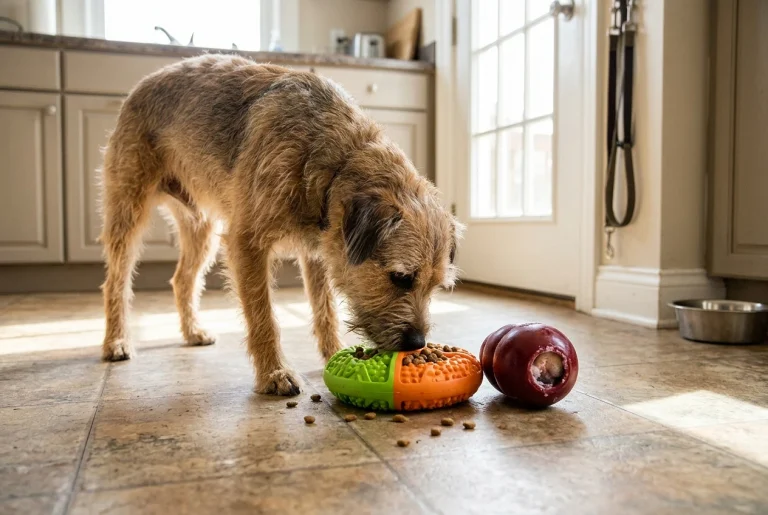
- Small, soft treats. Pea-sized pieces are easy to swallow quickly, so your dog does not stop to chew and lose focus. Use something a bit more exciting for harder tasks like coming when called.
- A treat pouch. Clip it near the door or wear it while you move around the house. When the treats are on your waist, you will use them more often, and the timing of rewards improves.
- A toy for a reward. Some dogs work harder for a game of tug or a quick toss than for food. Keep one toy that only comes out for training.
- A mat or small blanket. This becomes the settle spot.
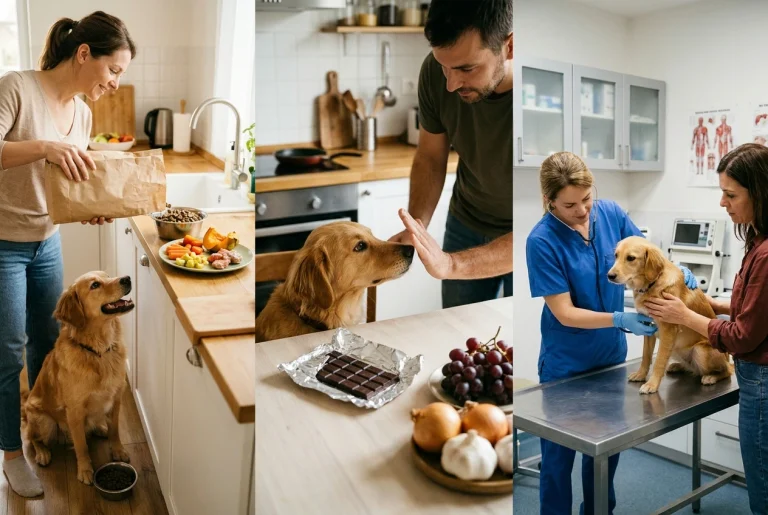
Treats count toward your dog’s daily calories, so reduce mealtime portions slightly on heavy training days, or use part of the dog’s regular kibble as rewards. If you are still working out what to feed, how to choose your first dog food can help you decide.
When a dog training routine goes badly and you only have five minutes
Some days your dog will be distracted, you will be tired, or the morning will fall apart. A bad session does not undo your progress, and a shorter, easier version still counts.
On those days:
- Do one easy skill, three to five times. A couple of sits and a name game keep the habit alive.
- Lower the difficulty. If your dog cannot manage “come” in the yard, go back to the hallway. If they cannot settle on the mat, reward them just for stepping on it.
- Check the basics. An overtired, hungry or under-exercised dog will struggle. A short walk or sniff break before a session can help.
- End calmly. If you feel frustrated, stop. Give one easy cue your dog knows, reward it, and finish.
Missing a day is fine. The routine matters over weeks, and returning the next morning is all it takes.
Signs it’s working, and when to ask a trainer for help
Progress shows up in small, ordinary moments, usually before the formal skills look polished.
- Your dog glances at you when they hear their name, even mid-sniff.
- They sit at the door or at their bowl without being asked.
- They come to you faster indoors and with less coaxing.
- They settle on the mat for longer, or choose to lie down while you eat.
- Greetings at the door are calmer.
Some problems are better handled with a professional. Consider contacting a qualified trainer who uses reward-based methods if your dog growls, snaps or guards food or toys, shows intense fear of people or noises, or becomes very distressed when left alone. The same applies if you have practiced consistently for several weeks and see no change. If your dog’s behavior shifts suddenly, such as new aggression, accidents in a house-trained dog or a loss of interest in food, check with your vet first, since pain or illness can be the cause.
Your first two-minute session
Pick one daily moment this week, like the minute the kettle goes on, and try your first two-minute session. Say your dog’s name, reward the look, and repeat a few times. That is the whole routine in miniature, and everything else builds from it.
If you’d like to see the gear we like for quick sessions, check our recommended training treats and treat pouches.