How Long Can You Leave a Dog Home Alone While You Work? A Starter Plan for Busy Households
If you’re leaving for work or school and your dog is watching you from the hallway, the guilt is real. The practical question is how long you can leave a dog home alone while at work, and the honest answer is that no single number fits every dog. A healthy, settled adult dog with a comfortable space, a good walk beforehand and a way to relax can often handle a working stretch alone. A young puppy, a senior dog or a dog with a medical need cannot go a full day without a break, however well trained they are.
This plan helps you work out where your dog sits, get the house ready, and build up alone time over about two weeks instead of starting with a full day on Monday morning.
How long is too long? What decides your dog’s alone-time limit
Several things set the limit for your dog. Look at each one before you decide how long a stretch is fair.
- Age. Puppies need to go out to the toilet far more often than adult dogs, and they tire and get lonely quickly. A full workday alone is not realistic for a young puppy without someone coming in.
- Health. Dogs with digestive trouble, joint pain, diabetes or other conditions that affect toileting, eating or medication timing need more frequent check-ins. Older dogs often need more toilet breaks than they did in their prime. Your vet can tell you what is reasonable for your dog.
- Temperament and history. Some dogs settle the moment the door shuts. Others get worried when their person disappears, especially in the first weeks in a new home or after a change in routine.
- Exercise and mental activity. A dog who has had a proper walk, a toilet break and something to chew is more likely to sleep through the morning.
- Your actual time away. Count door to door, including the commute, a lunch out or an errand on the way home. A seven-hour workday can easily be a nine-hour absence for the dog.
Write down your real absence time, then compare it with your dog’s age and needs. If the gap between the two is large, plan for a midday helper from the start. If it is small, the rest of this plan is mostly about training and comfort.
Before the first workday: set up a calm, safe spot for your dog
Choose one area for your dog to spend the day. A quiet room with a baby gate, a corner of the kitchen or a crate your dog already likes all work. Smaller is usually easier for a dog still learning to be alone, and a spot they can reach easily helps them settle. The first seven days at home are a good time to introduce this space if your dog is new to you.
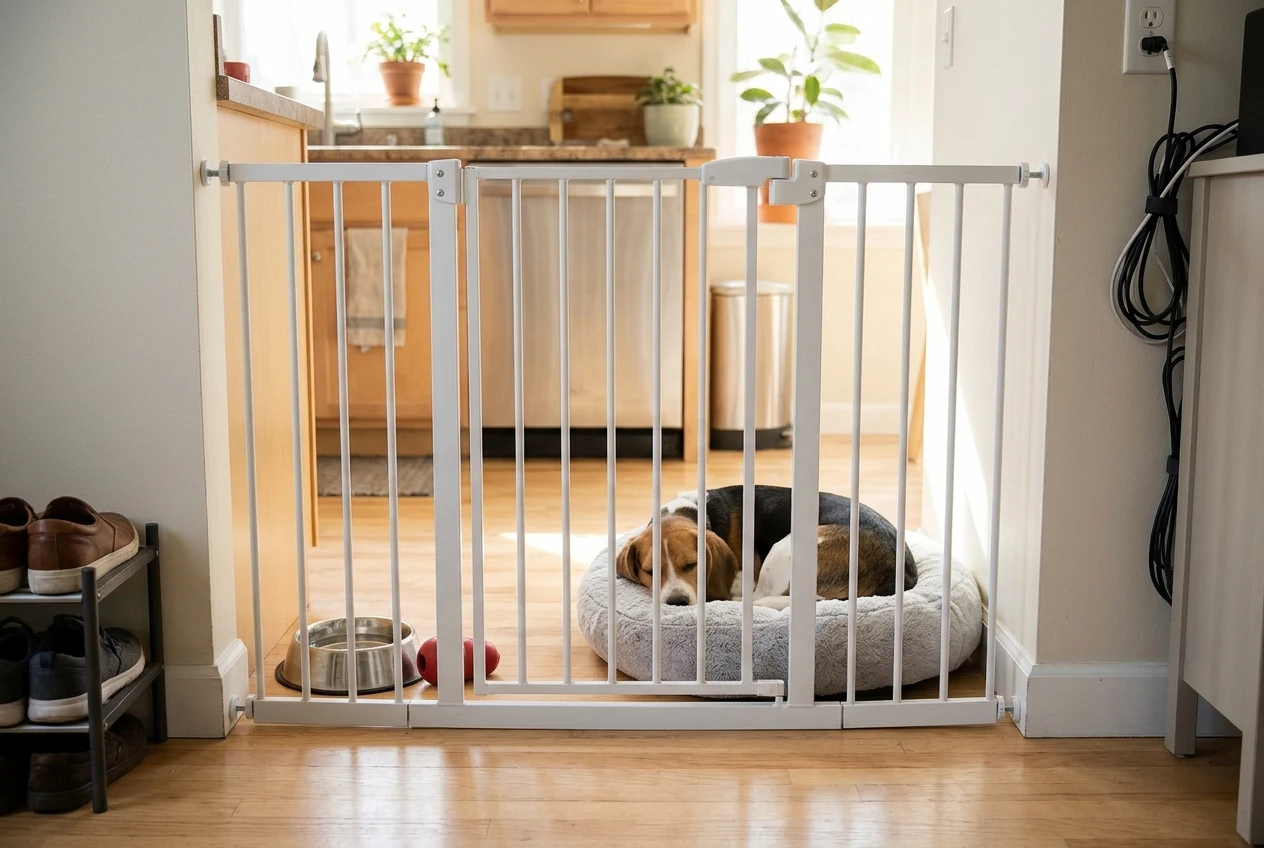
Set the spot up like this:
- A comfortable bed that is theirs, placed away from drafts and direct sun.
- Fresh water in a bowl that won’t tip easily.
- One or two chews or toys that are safe for your dog’s size and chewing style.
- Nothing within reach that could hurt them or that you’d hate to lose: shoes, cables, medication, houseplants, bins, laundry.
- A comfortable temperature for the whole time you’re gone.
Think about what your dog can see and hear from there. A dog who barks at everyone walking past the front window may do better in a room without a view. Some dogs find a radio or television at low volume comforting, and it costs nothing to try. If your dog is house-trained, make sure they can reach the toilet area or the door where a helper will let them out.
A gentle build-up: practising short absences before you rely on them
Dogs learn that being alone is safe by experiencing it in small doses that end before they get worried. If you go straight to a full day, the first time they feel upset may be when nobody is there to help. Spread the practice over the first two weeks.
Days 1 to 3: staying calm while you are nearby. Settle your dog on their bed with a chew, then move around the house. Step into another room for a minute, then come back and say nothing special. Close a door or gate between you for a few minutes. If you want a simple way to practise settling, the ten-minute training routine fits it into a short daily session.
Days 4 to 7: leaving the house. Walk out, close the door, wait one to two minutes, and come back in. Then try five minutes, then ten, then fifteen. Mix the lengths so the pattern isn’t always getting longer. A short one after a long one is perfectly fine.
Week 2: stretching out. Build toward 30 minutes, an hour, and then two hours. Return before your dog gets upset. If they show stress, go back to the last length they managed comfortably and repeat it for a few days. A slow week does not mean you’ve failed.
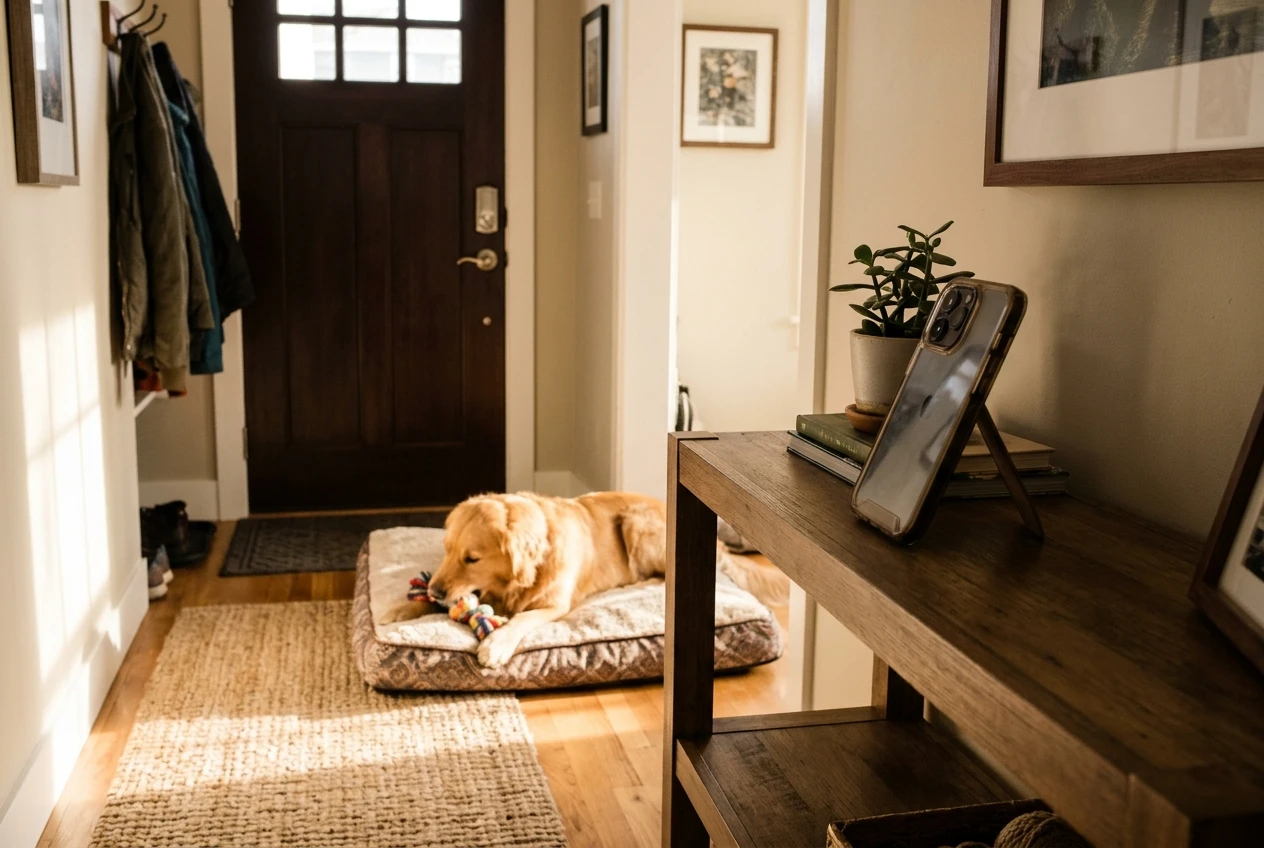
If you can, use a pet camera or a phone propped up in the room to watch what your dog does after you leave. Many dogs look worried for the first minute or two and then lie down. That is different from continuous barking or frantic pacing, which tells you the absence was too long for now.
Do not move to a full workday until your dog has managed a couple of absences of a similar length to your real one, with a visitor or a break in the middle if the day is longer than their limit.
What to do in the hour before you leave and the minute you walk back in
The hour before you go sets up how the day feels. Aim for this order:
- A walk or active play, long enough that your dog is pleasantly tired.
- A toilet break outside.
- Breakfast, or a puzzle feeder if they are used to one.
- A quiet few minutes before you walk out.
Keep the goodbye short and low key. A long, emotional farewell can make your leaving seem like a big event. A calm word, a chew handed over and the door closing is enough. It might feel cold at first, but it helps your dog stay relaxed.
The return works the same way. If your dog is jumping and spinning, wait a moment until they settle, then greet them softly. Take them straight outside for a toilet break, then spend some time together: a walk, a game, dinner. Dogs who get a big fuss each time you arrive can learn to spend the whole day waiting for that moment.
Easy ways to make the day easier: puzzle feeders, chews, and a midday visitor
A dog with something to do is more likely to settle. A few simple options:
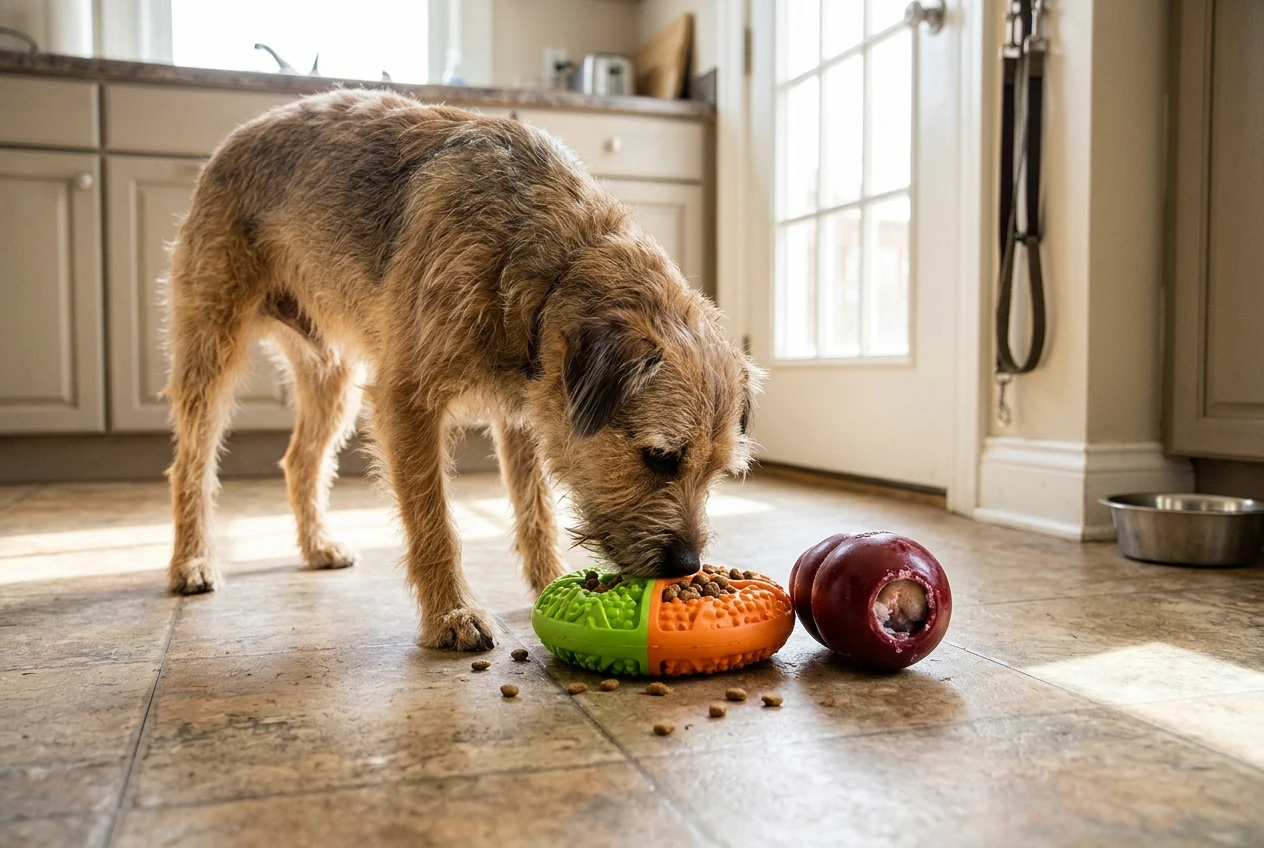
- Puzzle feeders. Part of the day’s food in a feeding toy turns a few minutes of eating into a longer job. Start with easy versions at home while you’re present, so your dog knows how to work it before you leave. Choose a size that suits your dog.
- Safe chews. Pick chews suited to your dog’s size, age and chewing habits, and watch them with each new one the first few times. If you’re unsure which foods are safe to stuff or serve, the guide on what to feed a new dog covers what to keep off the plate.
- Frozen stuffed toys. A hollow toy filled with something dog-safe and frozen lasts longer than the same filling served fresh.
- A midday visitor. A friend, neighbour, family member, dog walker or you coming home at lunch gives your dog a toilet break, a bit of company and a split in a long day. Of all the options here, this one makes the biggest difference for puppies, seniors and dogs who find time alone hard.
If you choose products to help, check they are right for your dog’s size and chewing style, and introduce only one new item at a time so you can see what works.
Signs your dog is coping, and signs they are struggling
Your dog can’t tell you how the day went, but their behaviour can. Watch for these over the first few weeks.
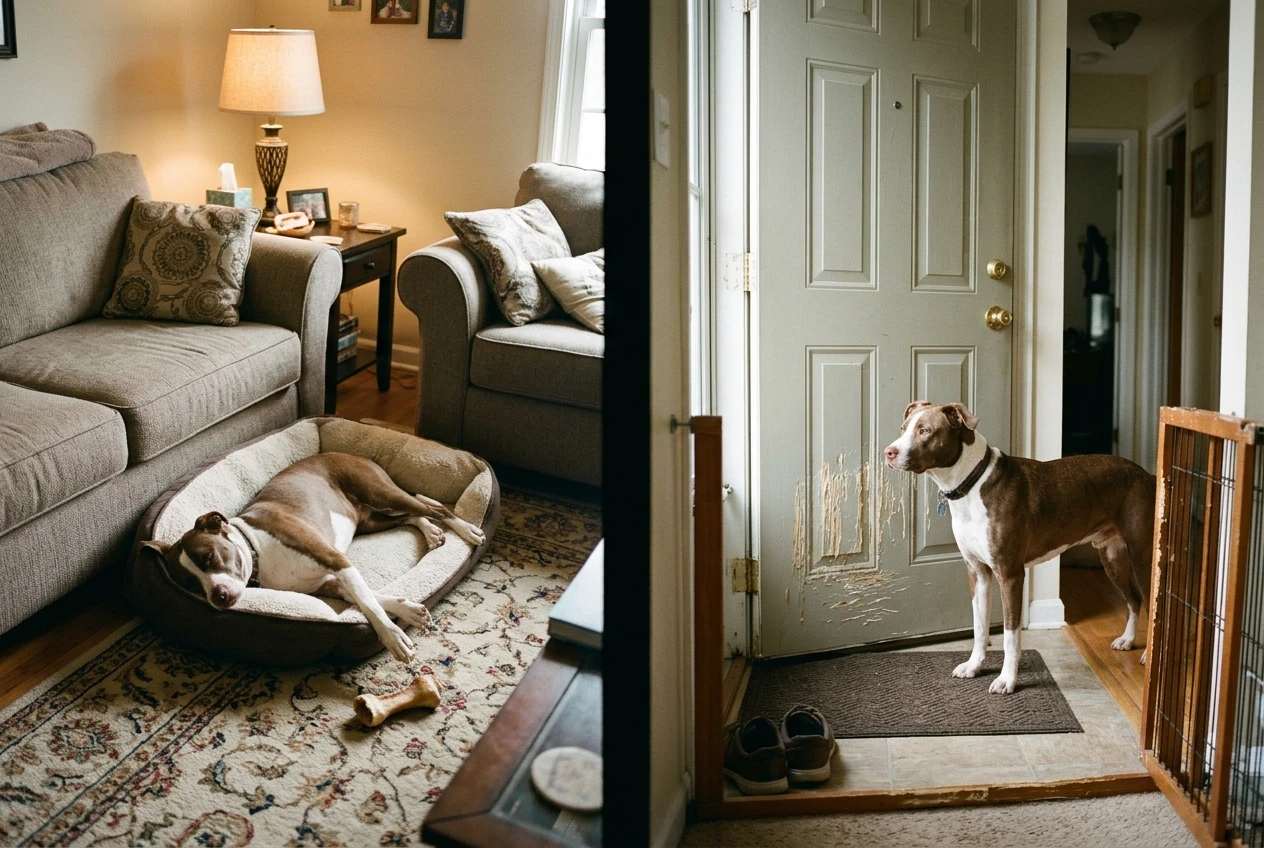
Signs they are coping:
- They are asleep or resting calmly when you walk in.
- The food in the feeder or the chew has been eaten or worked on.
- Your house-trained dog has kept the house clean.
- They greet you happily and then settle again within a few minutes.
Signs they are struggling:
- Long stretches of barking, howling or whining, which a neighbour or a camera may reveal.
- Scratching or chewing at doors, window frames or gates.
- Toilet accidents in a dog who is normally clean.
- Drooling, panting or pacing, or a wet, messy area around the door.
- Refusing treats or chews you leave behind.
- Being very clingy or anxious as you get ready to leave, followed by an extreme reaction when you return.
One rough day, such as a thunderstorm or a delivery driver at the gate, is not a pattern. Several of these signs across several days is a message that the current plan is asking too much.
When to ask for help: dog walkers, daycare, or your vet
More patience is the right answer when your dog is making slow but steady progress. Help is the right answer when they are not, or when the plan can never work for the hours you’re away. Consider a midday helper if:
- Your dog is a young puppy or a senior who can’t go that long between toilet breaks.
- Your real absence is longer than the longest stretch your dog has handled comfortably.
- You’ve practised gradually for two weeks and the signs of struggling are still there.
- Your dog is upset in the first few minutes after you go, every time.
Your options include a dog walker or sitter who visits at midday, a daycare a few days a week, or a neighbour or relative who can drop in. Meet anyone new in person and let your dog meet them while you are home.
Call your vet if the signs of struggle come on suddenly, if a house-trained dog starts having accidents, or if you notice changes in appetite, drinking or energy. Pain and illness can look like behaviour problems. If your dog panics every time you leave and a gradual build-up isn’t helping, ask your vet about working with a qualified behaviour professional. Please don’t scold your dog for what they do when they are distressed; it won’t teach them to feel calm and can make the problem worse.
Your first two weeks: a simple checklist to copy
Copy this into your notes and tick things off as you go.
Before day one
- Choose and set up the spot: bed, water, safe chew, hazards removed.
- Work out your real door-to-door absence time.
- Decide who could help at midday if your dog needs it.
Days 1 to 3
- Practise settling on the bed with a chew while you are in the house.
- Step into another room for one to three minutes, then return calmly.
- Try one puzzle feeder at mealtime while you are home.
Days 4 to 7
- Practise leaving the house for 1, 5, 10 and 15 minutes, mixing the order.
- Keep goodbyes and hellos quiet.
- Watch a camera or note how your dog is when you return.
Week 2
- Build toward 30 minutes, an hour, and then two hours, backing up if your dog gets upset.
- Walk and toilet your dog before each practice, and give a chew or feeder as you leave.
- Review the signs list at the end of the week and decide whether you need a midday helper, daycare or a call to the vet.
Pick one change from the checklist to try this week, like a short practice absence or a puzzle feeder before you leave. If you have a young puppy, read our guide to crate training a puppy when you work full days next.