What to Feed Your New Dog Day to Day, What to Keep Off the Plate, and When to Call the Vet
You have the bag of food in the kitchen, a dog watching you with great interest, and a head full of conflicting advice. Working out what to feed a new dog comes down to a short list of habits: regular meals, measured portions, a few foods that are always off limits, and a clear idea of when a phone call to the vet beats waiting. This guide covers all four.
A normal feeding day with a new dog
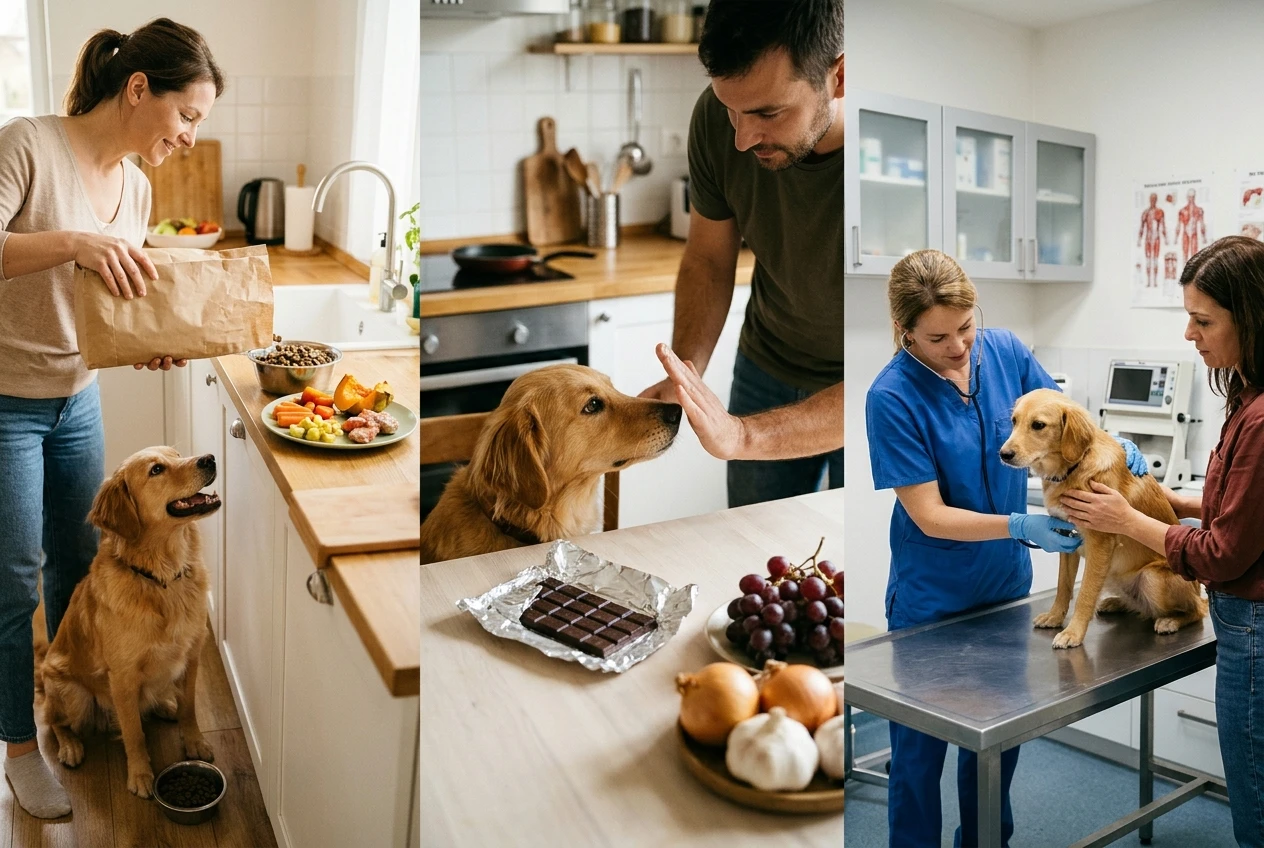
Dogs do best on a predictable schedule, and the schedule is as much for the household as for the dog. Most adult dogs eat two meals a day, roughly twelve hours apart. Puppies need smaller meals more often. Three or four a day is common for young puppies, and your vet will tell you when to cut back as your puppy grows.
Here is what a workable day looks like for a household with a busy morning:
- Morning meal: before you leave for work or school, or right after the first walk outside.
- Midday meal (puppies only): someone comes home, a neighbor drops in, or a pet sitter handles it. If nobody can, ask your vet how to adjust the schedule.
- Evening meal: before or soon after your own dinner, so the dog is not begging at the table.
- Water: a clean bowl, filled fresh each day and available all day. Check it whenever you pass through the kitchen.
Tie meals to things you already do every day, like the morning coffee or the school pickup. A routine anchored to an existing habit is much easier to keep than one tied to a clock time.
In a family, decide who feeds the dog at each meal. Dogs that get fed twice because two people each assumed the other had not done it gain weight quickly. A small whiteboard or a checklist on the fridge settles it. If you are still in the early days, our guide to your new dog’s first seven days at home shows how feeding fits in with everything else that week.
Put the bowl down, give the dog about fifteen minutes, then pick it up. Leaving food out all day makes it hard to notice appetite changes, and appetite is one of the best early signals of a health problem. A newly adopted dog may eat less than usual for a day or two while settling in. That is common. If the dog refuses food beyond that, see the vet section below.
How to read the feeding guide on the bag, and why your vet has the final word
The chart on the back of the bag matches your dog’s weight to an amount of food per day. Treat it as a starting point. The manufacturer has to write one chart for every dog of that weight, whether the dog is a couch companion or runs several miles a day.
A few things to know when you read it:
- The amount is per day, not per meal. Divide it by the number of meals you feed.
- Use a real measuring cup. A coffee mug or a scoop that came with a different food can be off by a lot.
- Many charts give a range. Start near the lower end for a calm dog and the higher end for a very active one, then adjust.
- Puppy charts are by age and expected adult weight. Make sure you read the right row.
Your dog’s body tells you more than the chart does. You should be able to feel the ribs under a thin layer of padding, and see a waist when you look down from above. If the ribs are hard to find, cut back a little. If they are sharply visible, tell your vet.
The vet has the final word because the vet can examine your dog. Age, breed, activity level, spay or neuter status, and any health condition all change how much a dog should eat. Bring the food bag or a photo of the label to the first visit and ask, “How much should I feed per day, and how often should we recheck?” Puppies grow fast, so portions change often.
What to feed a new dog: the everyday bowl
The core of the diet is a commercial dog food labeled as complete and balanced for your dog’s life stage. That label statement means the food contains the nutrients a dog needs at that age, so you do not have to add anything to make it nutritionally whole. A puppy should eat a food made for growth. An adult dog should eat an adult formula. Your vet can say when to move from one to the other.
Dry kibble, canned food, or a mix of the two all work. The right choice depends on your dog’s size, teeth, appetite, and your budget, which is why the choosing step is its own topic (the link is at the end of this article).
Adding homemade extras is where well-meaning new owners often run into trouble. Extra meat, rice, and leftovers can unbalance a complete diet and add calories fast. If you want to top the bowl with something to tempt a picky eater, use a spoonful of the same brand’s canned food, and ask your vet before making it a habit. A dog on a special homemade diet should have that diet designed with a vet, not pieced together from internet recipes.
Keep the food itself consistent. A dog that eats the same thing every day usually has steadier digestion, and it is easier to spot a problem when only one thing in the day changes at a time.
Treats and table scraps: what is fine and how to keep treats from becoming dinner
A common guideline from vets is that treats should make up no more than about ten percent of a dog’s daily calories, with the rest coming from the main food. Small dogs reach that ceiling quickly. A few too many biscuits can account for a big share of their day.
Some simple ways to stay under the limit:
- Count training treats as food. Use pieces of kibble from the day’s ration for training, and reduce the meal slightly if you hand out store-bought treats too.
- Portion the day’s treats each morning. Put them in a small jar. When the jar is empty, treats are finished for the day. This works well in a family where everyone wants to give the dog something.
- Cut treats small. A dog does not need a whole biscuit to feel rewarded. Pea-sized pieces work for training.
Some human foods are fine in small amounts for most healthy dogs: plain carrot pieces, green beans, apple slices without the core and seeds, and a small bit of plain cooked chicken with no seasoning, oil, or skin. Introduce any new food one at a time and in a tiny amount. If your dog has a health condition, ask your vet before offering anything outside the regular diet.
Peanut butter deserves a warning. Many dogs love it, but you must check the label for xylitol before it goes anywhere near the dog. More on that below.
Table scraps teach a dog to beg and often carry fat, salt, and seasonings. A simple house rule helps: the dog eats from its own bowl, not from the table or the counter.
The never-feed list
Post this where the whole family can see it, such as the inside of a cupboard door or on the fridge. Guests and children should know it too.
- Chocolate. It contains theobromine, which dogs process poorly. Dark chocolate and baking chocolate are the most dangerous, but no kind is safe to share.
- Grapes and raisins. These can cause kidney failure in dogs, and no amount has been established as safe. This includes raisins hidden in cereal, trail mix, and baked goods.
- Xylitol. This sweetener is in sugar-free gum, candy, some baked goods, some toothpastes, and some nut butters. It can cause a dangerous drop in blood sugar and liver damage. Read labels.
- Onions and garlic. Raw, cooked, or powdered, they can damage a dog’s red blood cells. Leftovers cooked with onion or garlic count.
- Macadamia nuts. They can cause weakness, vomiting, and tremors.
- Alcohol. Dogs are much smaller than people, so even a little can do harm. Keep drinks off low tables and floors.
- Cooked bones. They can splinter and cause choking or injuries in the mouth and digestive tract. Bin them where the dog cannot reach.
If your dog eats something from this list, call your vet or a pet poison helpline right away. Do not wait to see whether symptoms appear, because some of these toxins take hours to show effects, and early treatment is much easier. Have the packaging in hand if you can.
Switching foods without upsetting your dog’s stomach
Sooner or later you will change foods, whether because your puppy is growing up, the vet recommends something different, or the first choice did not suit your dog. A sudden swap is a common cause of loose stools and a sour stomach.
Switch gradually over about seven to ten days:
- Days 1 to 3: about one quarter new food, three quarters old.
- Days 4 to 6: half and half.
- Days 7 to 9: about three quarters new, one quarter old.
- Day 10: all new food.
If your dog’s stools get soft during the switch, hold at the current ratio for a few more days before moving on. If there is vomiting, or diarrhea that is severe or does not settle, stop the switch and call your vet.
Also find out what your dog was eating before you brought them home. A shelter, rescue, or breeder can usually tell you the brand. Feeding that same food for the first days, then making the change slowly, spares your dog one more adjustment in a week that already has plenty.
When to ask a vet: the signs worth a phone call
Most upset stomachs pass quickly. Still, a vet’s office would rather hear from you early than late, and the phone call costs far less than a dog that got worse while you waited. Call the same day for any of these:
- Vomiting more than once or twice, or vomiting along with lethargy
- Diarrhea lasting more than a day, or any diarrhea with blood
- Refusing food for a full day, or any refusal in a young puppy
- Unusual tiredness, weakness, or hiding
- Signs of pain, such as whining when touched, a hunched posture, or a tight belly
- Constant drinking or unusual urination
- Any sign of an allergic reaction after a new food, such as facial swelling, hives, or heavy scratching
Treat these as emergencies and go to a vet or emergency clinic right away:
- A swollen, hard belly with unproductive retching
- Collapse, seizures, or trouble breathing
- Choking that does not clear
- Known or suspected swallowing of a toxin such as xylitol, grapes, or chocolate
Puppies and very small dogs can become dehydrated and drop their blood sugar quickly, so wait less with them than you would with a healthy adult.
When you call, have this ready:
- Your dog’s age, breed, and approximate weight
- The food brand, how much you feed, and when the last meal was
- What your dog ate that was unusual, how much, and when, with the packaging if there is any
- What symptoms you have seen, when they started, and how often they have happened
- Any medications or supplements your dog takes
A short note on your phone with these details makes the call faster, and it is easy to forget things when you are worried.
Feeding gear that makes the routine easier for busy families
You do not need much, but a few items remove daily friction:
- A measuring cup or kitchen scale. Accurate portions are the single biggest help in keeping a dog at a healthy weight. A scale is more precise than a cup.
- An airtight food container. It keeps kibble fresh, keeps the bag tidy, and stops a clever dog from helping itself.
- Stainless steel or ceramic bowls. They are easy to wash and hold up to daily use. A non-slip mat under them keeps the kitchen floor dry.
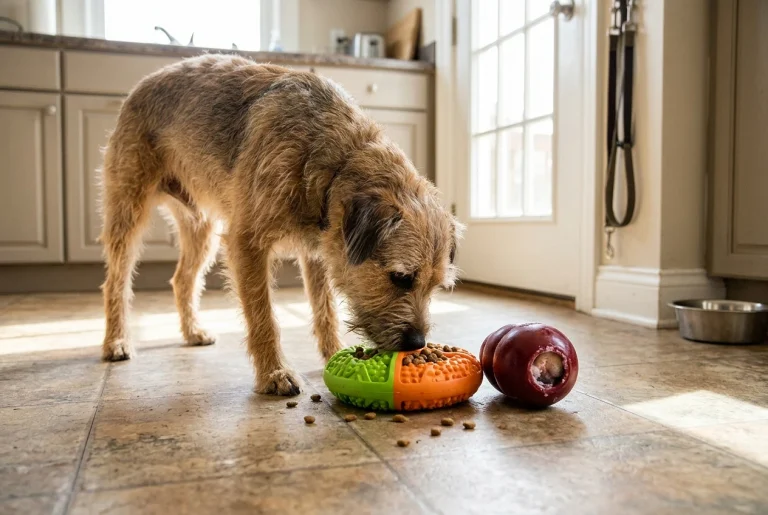
- A slow feeder or puzzle bowl. These can help a dog that gulps its food. Ask your vet if the gulping seems extreme.
- A treat pouch or jar. It holds the day’s treat allowance and makes training easy.
- A feeding chart or whiteboard. It tells everyone whether the dog has eaten, which prevents double meals.
Final Thoughts
The first few weeks with a new dog can feel like constant decisions. Feeding is one of the easiest areas to turn into a routine. Set meal times you can keep, measure the food, limit treats, and keep the never-feed list somewhere everyone sees it. Save your vet’s number, and the number of a pet poison helpline, in your phone today, before you need either one.
Still haven’t settled on a food? Start with our step-by-step guide, How to Choose Your First Dog Food Without Overthinking It, then come back to set up your feeding routine.