How to Puppy Proof a House: A Room-by-Room Checklist Before Your Dog Comes Home
If you are wondering how to puppy proof a house without spending the next month on it, begin on the floor. A puppy sees your home from about knee height or lower, and puppies explore with their mouths. Anything they can reach is a candidate for tasting, chewing or swallowing.
This checklist goes room by room. Every fix is sorted into do before day one or can wait a week, so you can finish the essentials in a weekend and handle the rest once you see how your puppy actually behaves.
Start on Your Hands and Knees: The 10-Minute Puppy’s-Eye Walkthrough
Set a timer for ten minutes and crawl through every room your puppy will be allowed into. Look at each space the way a small, curious animal would, and ask four questions:
- What can I chew from here?
- What can I swallow?
- What can I pull down or knock over?
- What can I squeeze behind, under or through?
Keep your phone in hand and start a note with two headings: “Before day one” and “Can wait a week.” Every hazard you spot goes under one of them as you crawl. Anything that could cause choking, poisoning or an electric shock goes on the first list. Anything that would only damage your belongings, such as a table leg or a rug fringe, can usually go on the second.
Carry a laundry basket or a bag with you. Shoes, toys, charger cables and stray socks can go straight into it, and you will have fixed a good part of the house before you finish the walkthrough.
Decide now which rooms are off limits. A puppy with access to three rooms is much easier to supervise than a puppy with access to the whole house. Baby gates and closed doors do most of that work, and you will see where they fit as you go.
The Entryway and Living Room: Cords, Shoes, Remotes and the Things That Look Like Toys
The entryway is where your puppy’s first days begin and where an escape is most likely. The living room is where your family spends the most time, so it holds the most clutter.
Do before day one
- Secure electrical cords. Gather loose cords behind furniture, run them along the wall with cord covers, or unplug whatever you can. Chewed live cords can cause burns and shocks.
- Hide or lift small electronics. Remotes, phone chargers, earbuds and game controllers all feel good to chew. Remote controls and many small devices contain button batteries, which are dangerous if swallowed. Put them in a drawer or on a high shelf.
- Clear the floor of shoes, bags and slippers. A puppy does not know your good leather shoes from a chew toy. Put up a shoe rack or close shoes in a cupboard.
- Check your houseplants. Some common plants are poisonous to dogs, including sago palm. Look up each plant you own on the ASPCA’s toxic and non-toxic plant list. Move anything questionable out of the house or into a room your puppy cannot enter.
- Move candles, space heaters and anything hot or breakable. Low coffee tables are at puppy mouth height.
- Plan a gate at the front door. Puppies dart through open doors, especially in the first weeks when everything is exciting and nobody has taught them a door routine yet.
Can wait a week
- Rug fringe, throw pillow tassels and curtain cords. Watch what your puppy goes for before you decide what to move.
- Rearranging furniture so there are no gaps for hiding. If you see your puppy squeezing behind the couch, block the gap then.
Magazines, decorative objects, throw blankets and craft supplies sit in the same category. A puppy will tell you quickly which ones interest them.
The Kitchen: Low Cabinets, Trash Cans and the Foods That Must Stay Out of Reach
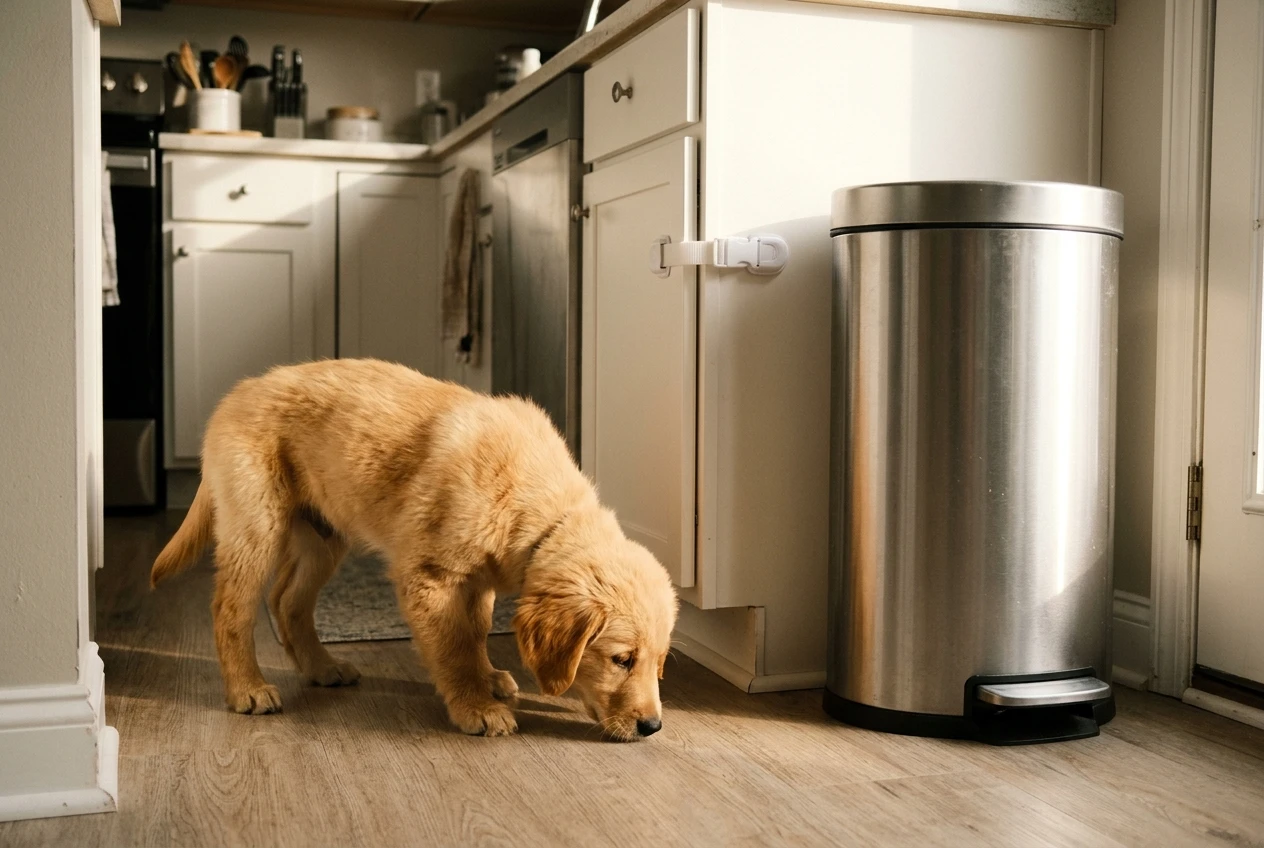
For many puppies, the kitchen smells like the best room in the house. It also holds most of the foods that are dangerous to dogs, so it deserves the most careful pass.
Do before day one
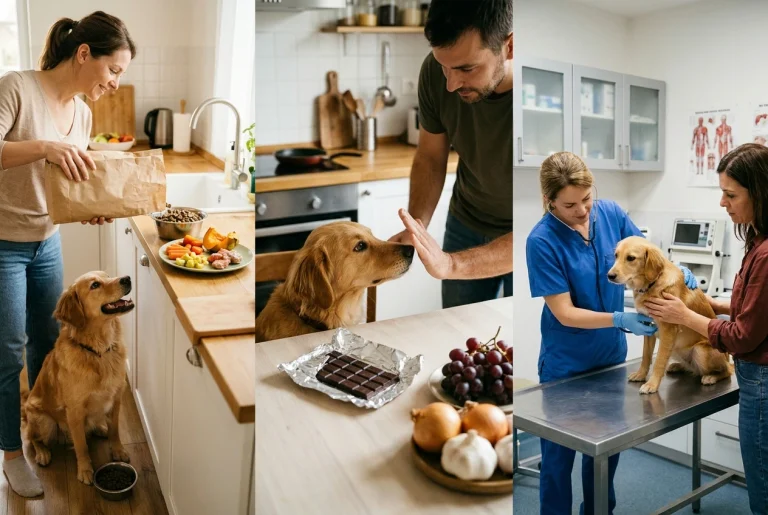
- Know the foods that are toxic to dogs. The main ones are chocolate, grapes and raisins, onions and garlic, macadamia nuts, alcohol and raw bread dough. Xylitol, a sweetener found in sugar-free gum, some candies, and some peanut butters and baked goods, is also dangerous. Check labels on anything sugar-free before it goes anywhere near your dog.
- Get a trash can with a lid that locks or a closing cabinet. Dogs get into food scraps, corn cobs, cooked bones and the string from roasts. A can your puppy can tip over or open is a recurring problem, not a one-off.
- Latch the low cabinets that hold cleaning products, dishwasher pods, and anything chemical. A child-safety latch costs little and works well on cabinets at puppy height.
- Keep counters clear. Puppies grow quickly and learn that counters hold food. Put away anything edible and anything sharp, and keep knives out of reach of any future counter surfing.
- Decide where the food and water bowls go. Pick a corner away from the busiest foot traffic, so your puppy can eat without being stepped on.
Can wait a week
- Locking every cabinet. Latch only the ones with hazards at first. If your puppy starts opening the pot cabinet, add a latch then.
- A feeding mat or spill tray. Useful, but you will see by day three whether you need one.
If you have not yet chosen what your puppy will eat, what to feed a new dog covers day-to-day feeding, which foods to keep off the plate, and when to call the vet. Whatever you pick, ask the breeder or shelter what the puppy has been eating, and begin with that so the first days do not include a sudden food change.
The Bathroom and Laundry Room: Medications, Cleaners and Socks
These rooms hold some of the most serious hazards in the house, and many of them look harmless to a human.
Do before day one
- Move all medications out of reach. Pain relievers such as ibuprofen and acetaminophen are toxic to dogs, and so are many prescriptions and supplements. A pill that drops on the floor can be eaten in a second, so take pills over a counter or sink rather than over open floor.
- Keep the doors closed or install a gate. The simplest fix for both rooms is that the puppy does not go in unsupervised.
- Store cleaners, bleach, detergent pods and toilet bowl tablets in a closed cabinet or a high shelf. Keep the toilet lid down if your puppy is likely to drink from it.
- Take the trash out of reach. Bathroom bins hold razors, floss, cotton swabs and used tissues, all of which are interesting to a puppy.
- Keep a hamper with a lid. Socks and underwear are among the most common things dogs swallow, and a swallowed sock can block the intestines and need surgery. A closed hamper, or a laundry room door that stays shut, prevents it.
Can wait a week
- Hair ties, bath mats and loofahs. Watch whether your puppy goes for them and move them if so.
- Dryer sheets and lint. Keep them off the floor once you have noticed your puppy investigating the laundry area.
Put your vet’s phone number, the number of the nearest emergency vet and a pet poison hotline in your phone before the puppy arrives. You will probably never need them, but nobody wants to be searching for a number while a puppy is chewing something.
Bedrooms and Kids’ Rooms: Small Parts, Stuffed Toys and Closet Doors
Children’s rooms contain the highest number of small, swallowable objects in the house. Bedrooms also have the closets where shoes, slippers and dirty laundry live.
Do before day one
- Do a floor sweep of every bedroom. Building bricks, beads, coins, hair clips, marbles, craft supplies and small action figures all need to be picked up.
- Teach everyone in the family the new rule. Toys that are small enough to swallow go in a bin with a lid or on a shelf, every time. This rule is much easier to keep if you introduce it as a family before the puppy is home.
- Keep closet doors shut. Shoes, slippers, belts and laundry are all chewable. A door latch or simply the habit of closing the door works.
- Decide whether the puppy sleeps in a bedroom. If the crate or pen goes next to your bed for the first nights, do the crawl through that room extra carefully.
Can wait a week
- Stuffed toys. Children’s soft toys can be chewed apart by puppies and the stuffing and plastic eyes can be swallowed. Keep your children’s favorites in their rooms with the door closed, and give your puppy their own dog-safe toys.
- Under-bed storage. If your puppy spends time sniffing under beds, move or box up whatever is down there.
Children also need rules for the puppy. Give younger kids a calm, simple job such as filling the water bowl, and teach them to let the puppy sleep without being picked up or disturbed.
The Yard, Garage and Balcony: Gates, Chemicals and Escape Routes
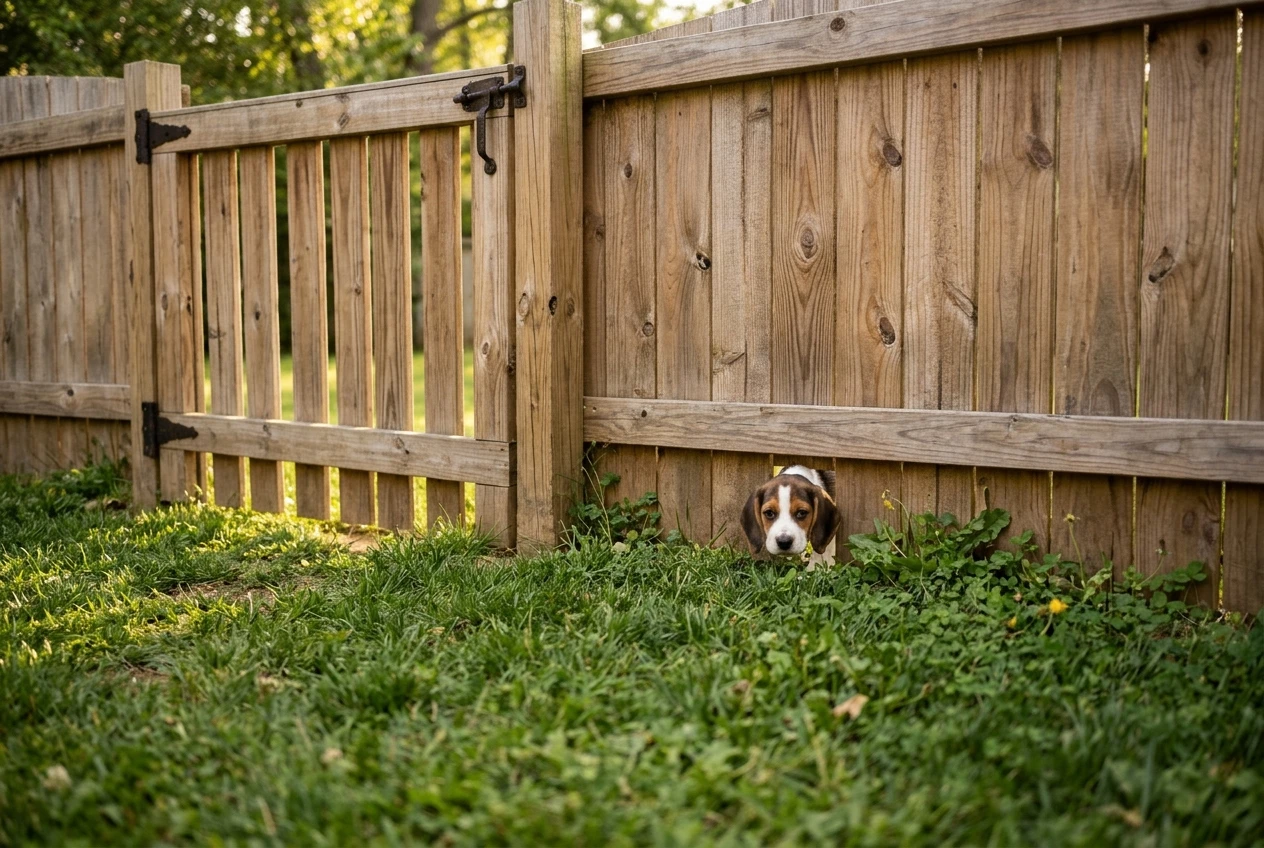
Outdoors, the main risks are escape and poison. A puppy can fit through a much smaller gap than you would expect.
Do before day one
- Walk the fence line. Look for gaps under the fence, loose boards, gaps beside the gate and any spot where the ground has been dug out. Fix or block each one.
- Check the gate latch. It should close on its own and be difficult to push open.
- Put away garden chemicals. Fertilizer, weed killer, slug bait, rodent poison and pesticides all go in a closed cabinet or a high shelf. Slug bait and rodent poison are especially dangerous.
- Clean up antifreeze and any automotive fluid. Antifreeze can taste sweet to animals and is highly toxic. Wipe up any garage floor spills and store containers on a high shelf with the lids on.
- Check the pool, pond and hot tub. Cover them, fence them off, or keep the puppy out of the area unless an adult is right there.
- Check balcony railings. If a puppy can fit its head or body between the bars, block the gap with plexiglass or a mesh panel made for the purpose.
- Look at the plants and mulch. Some garden plants are toxic, and cocoa bean mulch contains the same compounds that make chocolate dangerous.
Can wait a week
- A dedicated digging spot or a designated bathroom area. You can set these up once you see how your puppy uses the yard.
- Landscaping fixes like fencing off flower beds. Start with a leash on, and add barriers after you see where your puppy goes.
For the first weeks, go outside with your puppy every time. That supervision is also your best chance to reward them for going to the bathroom in the right spot.
Set Up the Puppy’s Own Safe Zone (and Where the Crate Fits)
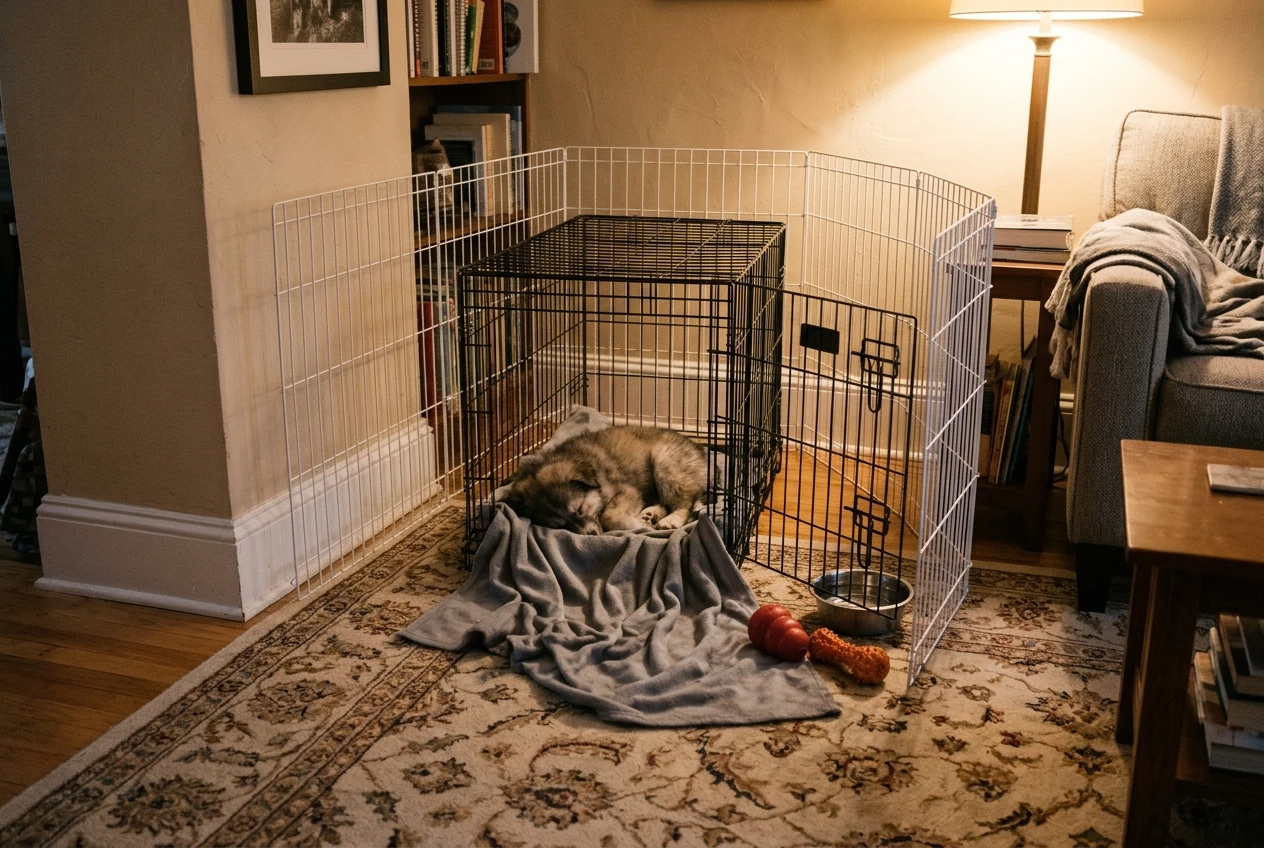
A safe zone is the one place in the house where the puppy can rest without being disturbed and without getting into trouble. Having one makes the rest of the house much easier to manage, because you always have somewhere to put the puppy when you cannot watch them.
Do before day one
- Choose the spot. Pick a part of the house where the family spends time, such as the kitchen or the living room, so the puppy does not feel isolated. Avoid drafty spots and spots next to loud appliances.
- Mark off the area. Use an exercise pen or a baby gate to define the space.
- Put in a crate with the door open. The crate becomes the puppy’s bed. It should be big enough for the puppy to stand up and turn around.
- Add water, a bed or blanket, and two or three chew toys.
- Put washable bedding or pee pads in the pen if you expect accidents, which you should.
If you are away at work for long stretches, planning the crate in advance matters. Crate training a puppy when you work full days covers how to build the routine so the crate becomes a comfortable place for your puppy and not a source of stress.
Can wait a week
- Moving the crate from its first spot to a permanent one.
- Covering the crate, or choosing a nicer bed. Puppies chew bedding, so a plain blanket is a better choice for the first week.
What to Buy Now and What Can Wait
Each item below solves a specific hazard from this checklist. If an item does not match a hazard or a daily need, it can wait.
Buy before day one
- Baby gates or an exercise pen: keep your puppy out of the bathroom, laundry room and any off-limits area, and mark off the safe zone.
- A crate that fits the puppy: gives your puppy a safe place to rest and gives you a safe way to travel home.
- A collar or harness, an ID tag and a leash: needed for the trip home and for every trip outside.
- A lidded or locking trash can: blocks access to food scraps and bathroom waste.
- Child-safety cabinet latches: protect cleaners, pods and chemicals at puppy height.
- Cord covers or cable organizers: cover the electrical cords you cannot move.
- An enzyme-based cleaner made for pet accidents: helps remove odor so the puppy is less likely to return to the same spot.
- A few durable chew toys: give your puppy something appropriate to chew when they go after furniture or shoes.
- Food and water bowls, and the food the puppy already eats.
- A lidded hamper: keeps socks and laundry out of mouths.
If you are still choosing a food, how to choose dog food for a first-time dog owner walks through the decision.
Can wait a week
- A fancy bed. Many puppies chew their bedding, so start with a blanket.
- Grooming tools beyond a basic brush.
- A large bundle of toys. Buy a few, watch which ones your puppy likes, and then add.
- Clothing, a stroller, or specialty gear.
Your Last-Night Check, and What Comes Next
The night before your puppy comes home, do one more crawl through every room they can enter. Ten minutes is enough, and you are looking for anything you missed or anything that has drifted back onto the floor.
Run through this list:
- Cords are covered, unplugged or out of reach.
- Medications, cleaners and chemicals are stored high or behind latches.
- Trash cans are closed, and the laundry hamper has a lid.
- Gates and doors block every off-limits room.
- Small toys, shoes and socks are off the floor.
- The yard fence, gate and latch are secure.
- The safe zone has a crate, water, a bed and chew toys.
- Your vet’s number, an emergency vet’s number and a poison hotline number are saved in your phone.
Tell everyone in the household the plan for the first day, including who takes the puppy outside, who feeds them and where they sleep. A shared plan prevents mixed signals in the first hours, when a puppy is still learning where they are.
Keep your expectations modest, too. Your puppy will have accidents, chew something you forgot to move and cry on the first night. A puppy-proofed home does not prevent those things. It means the mistakes are small and nothing dangerous is in reach.
Ready for the big day? Read Your New Dog’s First Seven Days at Home, Day by Day to see what to expect once your puppy walks through the door.