A Daily Dog Care Routine for Busy Families, Built Around Who Is Actually Home
Dogs settle into a household by learning what happens next. When food, potty breaks, walks and quiet time arrive in roughly the same order each day, a dog stops having to guess, and that usually shows up as calmer behavior and fewer accidents. Perfect days are not required. A predictable order is what counts, and you can keep it up even on a day when the car pool runs late.
A routine also protects the people in the house. When “who walked the dog?” is answered by whoever feels guiltiest, one tired parent ends up doing everything. A written plan with names on the jobs removes that daily negotiation.
This article gives you one full day of dog care for a household with work hours and school runs, plus a way to split the jobs so the whole family shares them. Copy it, change the times, and adjust it as your week changes.
A Daily Dog Care Routine for Busy Families: The Whole Day at a Glance
Here is a sample weekday. The times are examples for a household that wakes around 6:45 and has an adult home by early evening. Move every block to match your own week.
- 6:45 Wake-up: Straight outside for a potty trip, with no play first.
- 7:00 Breakfast: Measured meal, fresh water.
- 7:15 Short walk: About 15 to 20 minutes, mostly sniffing.
- 7:45 Departure: Dog settled in their space with a chew or food toy.
- 5:30 PM Return: Potty trip first, then a calm greeting.
- 6:00 Reset: A walk or play session, depending on the dog’s energy.
- 6:45 Dinner: Measured meal, fresh water, a few minutes of practice for a trick or cue.
- 8:30 Play and calm-down: Gentle play, then quiet time.
- 9:45 Last potty trip: Short and boring, then bed.
That is six or seven touchpoints a day, and most of them take five minutes or less. The sections below explain each one and who can take it.
Puppies need more frequent potty trips and meals than the schedule above shows, and senior dogs or dogs with health conditions may need changes too. Your vet can tell you what fits your dog’s age and size.
Start With Your Family’s Real Week, Not an Ideal One
A routine built for the week you wish you had will fail by Wednesday. Before you assign any times, write down what your week actually looks like.
Take a sheet of paper or a shared note and list:
- The time each person leaves and returns on each weekday.
- Fixed commitments such as practices, lessons, late meetings or shift work.
- Which days are different from the rest.
- The gaps when the dog is home alone.
Look at the list and find the two or three windows when someone is reliably home. Those are your fixed points. If the only dependable time is 7:00 AM and 6:30 PM, build around those and let everything else flex.
If your weeks vary a lot, make two versions: a standard day and a late day. Two simple plans are easier to follow than one complicated plan with exceptions.
The Morning Anchor: Potty, Breakfast and a Short Walk in 20 Minutes
Mornings in a family household are crowded, so the dog’s part needs to be short and in the same order every day. Potty comes first because the dog has been holding it all night. Breakfast comes next, and the walk comes after the meal.
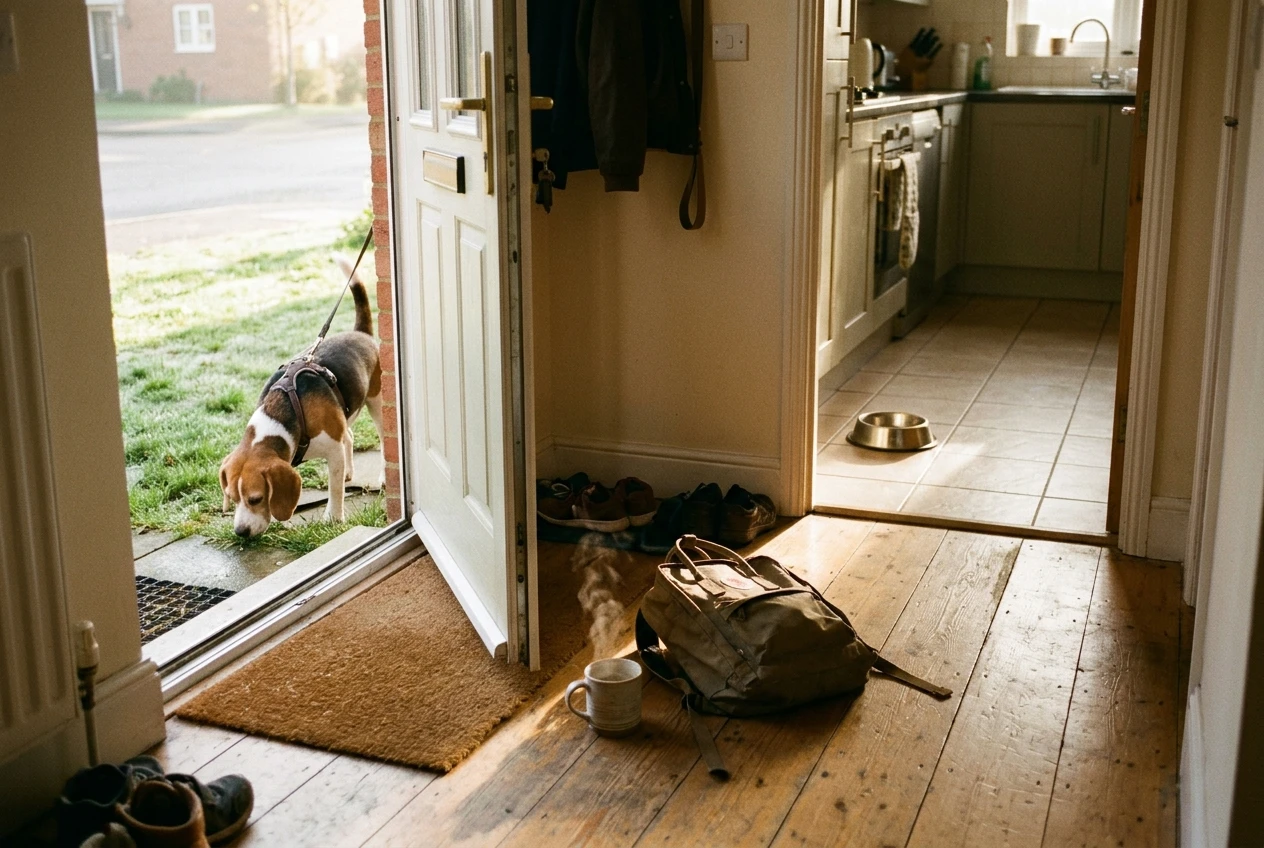
- Potty trip (3 to 5 minutes). Take the dog to the same spot on a leash if you can. Stay calm and quiet, and give a short word of praise when they go.
- Breakfast (5 minutes). Use a measuring cup and the portion on your dog’s food guidance or your vet’s advice. Pick up the bowl after the dog finishes so mealtimes stay predictable.
- Short walk (10 to 15 minutes). Let the dog sniff. Sniffing tires a dog out more than you might expect, and it does not require a fast pace.
If the morning is too tight for a walk, a longer potty trip plus a few minutes of tug or a food puzzle still gives the dog something to do. Save the longer walk for the after-work slot.
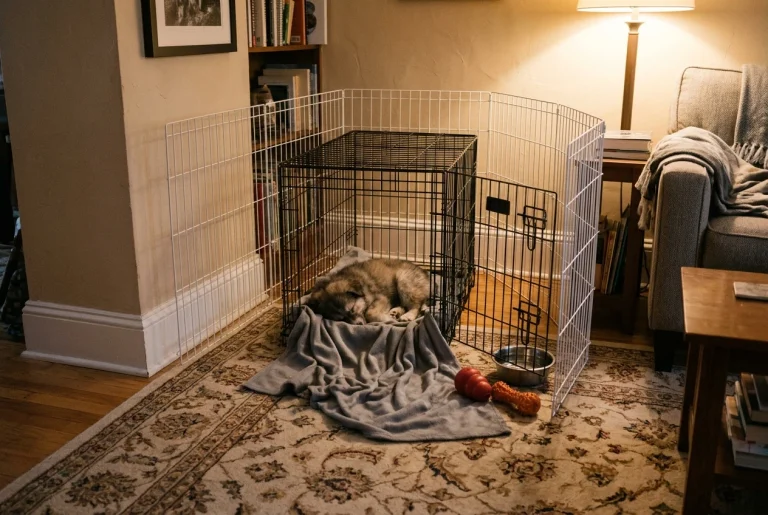
Before everyone leaves, settle the dog in their usual spot with fresh water and something to chew or lick. Leaving at the same point in the routine each day helps the dog learn what happens next.
The After-Work Reset: How to Reconnect Without Adding to the To-Do List
When you walk in, your dog has probably been waiting a while. The first few minutes set the tone for the evening, so keep them simple.
Take the dog out for a potty trip before anything else, even before you take off your coat. Then say hello calmly. A very excited greeting can wind a dog up when they need to settle, and it is harder to calm them again once they are wound up.
After that, the reset depends on the dog:
- High-energy dogs need a real walk or a game of fetch before the household’s evening gets busy.
- Calmer dogs may be happy with a shorter walk and some time lying near you while you change clothes or start dinner.
Fitting the dog into what you are already doing keeps this from becoming one more chore. Take them along while you carry in the groceries or check the mail, or let them lie in the kitchen while you cook.
The length of the daily gap matters here. If you are unsure how long your dog can comfortably stay home, this starter plan for working households covers the alone-time side in more detail. If the gap is longer than your dog can manage, a midday visit from a neighbor, a friend or a dog walker is worth arranging.
Evening and Bedtime: Dinner, Play, a Last Potty Trip and a Calm Wind-Down
Evening is when everyone is home, so it is the best time for the parts of dog care that take a little attention.
Dinner. Feed at roughly the same time each day. If you are still deciding what belongs in the bowl, this guide to feeding a new dog covers day-to-day feeding and what to keep away from your dog.
A few minutes of practice. Right before or after dinner, ask for a sit, a down or a recall, and reward it. Short sessions work better than long ones, and a ten-minute training routine shows how to fit this in around a full schedule.
Play. A round of tug, fetch or hide-and-seek in the living room works well. Finish with something calmer, such as a chew or a lick mat, so the dog learns that play ends and quiet time begins.
Wind-down. Dim the lights, turn off the loud TV and let the household settle. Dogs pick up on the mood of the room.
Last potty trip. Go out shortly before bed and keep it dull: no play, no chatter. Then the dog goes to their bed or crate and the day is over.
Who Does What: A Simple Family Job Split That Kids Can Really Join In On
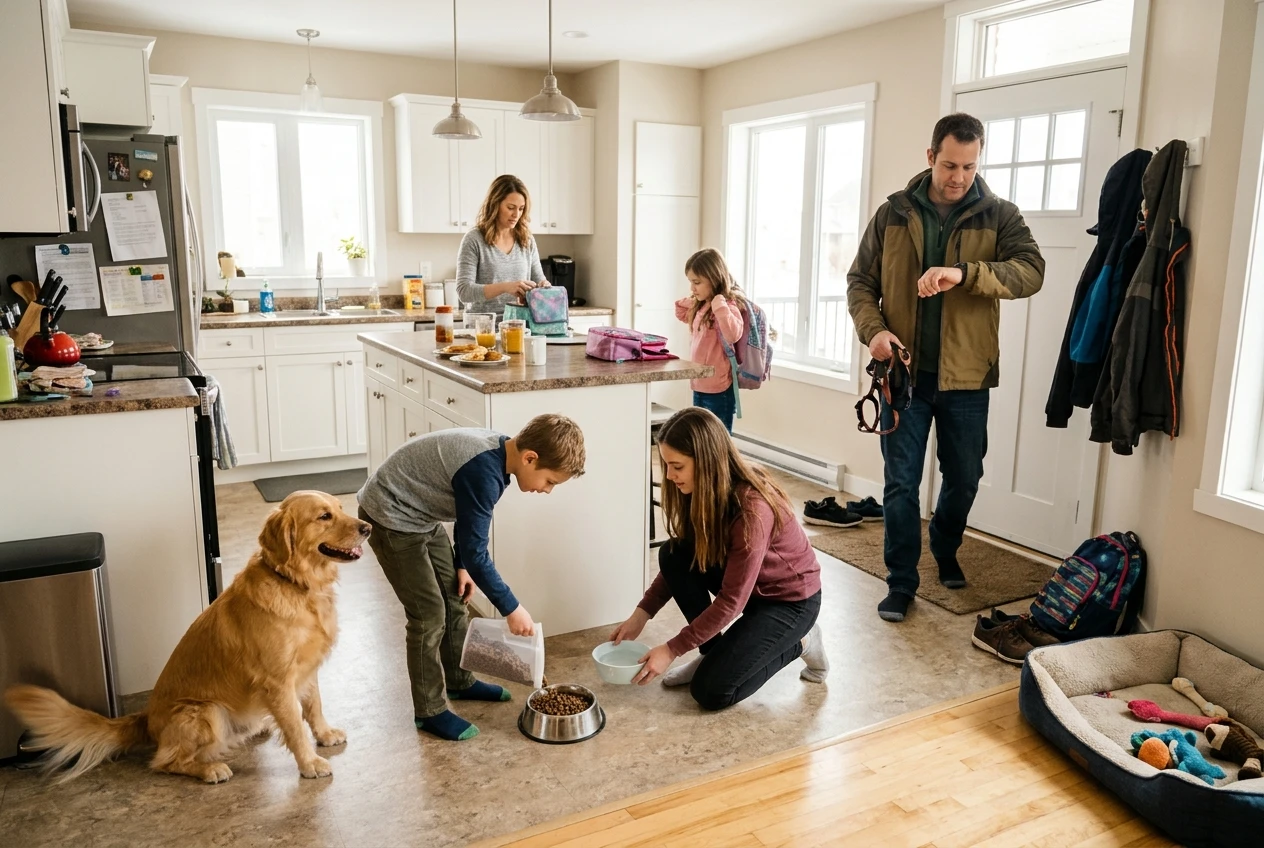
The plan works when each job has a name beside it. Write the jobs on a card on the fridge or in a shared family note and rotate them weekly if people want variety.
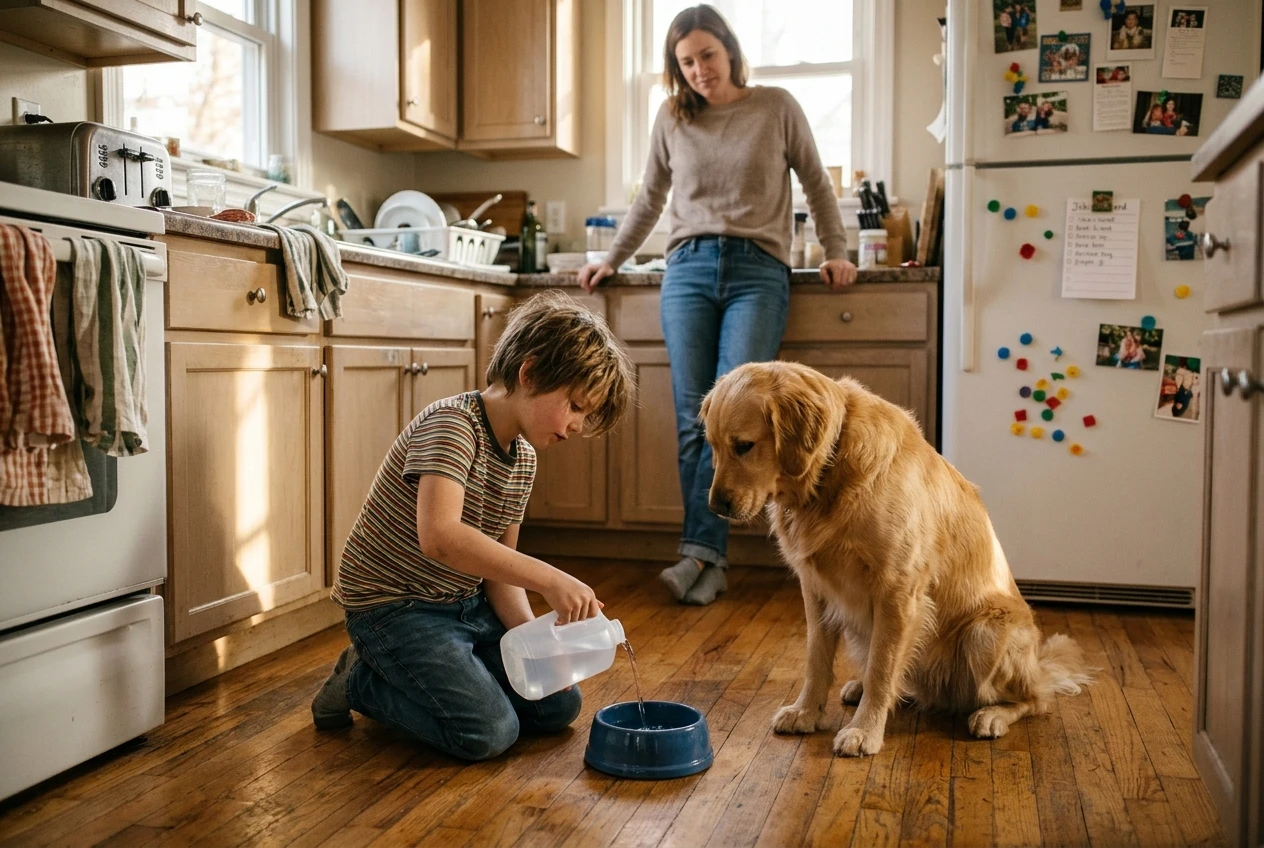
Job Who can do it Morning potty trip and walk An adult, or an older teen with an adult’s okay Fill the water bowl Any child who can carry it safely Measure and serve meals An older child, with an adult checking the portion at first Practice a sit or trick before dinner Any child, with an adult nearby Evening play session Kids of any age, supervised Last potty trip An adult Brushing A child, with an adult showing the right pressure Medication, flea and tick treatment, nail trims Adults only
A few rules help the split hold up:
- Match the job to the child’s age. A young child can carry a toy or hold a treat out flat, while walking a strong dog is an adult’s job.
- Give kids jobs with a clear start and finish, such as “fill the bowl” or “five minutes of fetch.” Open-ended jobs get forgotten.
- Keep the adult jobs spread out too. If one parent does every morning and every night, the arrangement will wear thin.
Children are usually proud to have a real responsibility, and dogs benefit from interacting with several people, as long as an adult supervises.
Weekly and Weekend Care That Is Easy to Forget
Some care happens too rarely to become a habit, so it slips. The fix is to put it on a calendar with a recurring reminder.
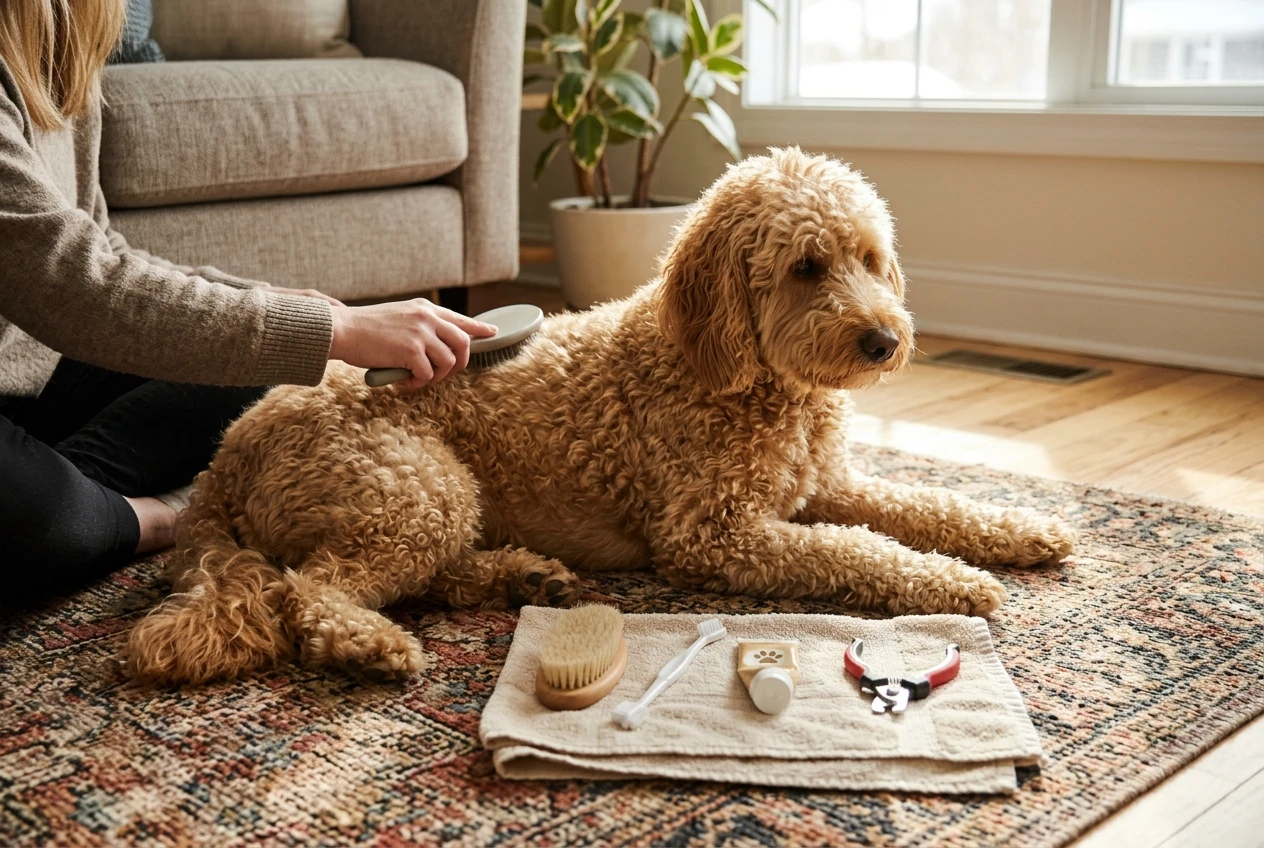
- Brushing. How often depends on the coat. Short-haired dogs may need it weekly, while long or curly coats can need much more. A weekend session also lets you check the skin for redness, lumps or anything unusual.
- Nail checks. Look at the nails weekly. If you hear clicking on hard floors, they may be getting long. Ask your vet or groomer to show you how to trim them if you have not done it before.
- Teeth. Brushing with a toothbrush and toothpaste made for dogs is the standard recommendation. Never use human toothpaste. If daily brushing is unrealistic, a few times a week is better than none, and your vet can suggest other options.
- Flea and tick dates. Check the product label and your vet’s advice for how often your dog needs treatment, then set a recurring reminder on that date.
- Vet reminders. Put vaccination and checkup dates in the family calendar when you book them, so they do not depend on one person’s memory.
Choose a weekend slot, such as Sunday afternoon, and call it “dog admin.” Fifteen minutes is usually enough to brush, check nails and look at the calendar for the coming week.
The Few Supplies That Make the Routine Easier, and What You Can Skip
A short list covers nearly everything above:
- A leash and a well-fitting collar or harness, with an ID tag.
- Food and water bowls, a measuring cup and an airtight container for the food.
- Poop bags kept by the door, so no one has to hunt for them.
- A chew toy and a food puzzle or lick mat for alone time and wind-down.
- A bed or crate where the dog can rest.
- A brush that suits the coat, plus dog toothpaste and a dog toothbrush.
- A washable mat or towel by the door for wet or muddy paws.
If you are choosing a food, this guide for first-time owners keeps the decision manageable.
You can skip anything that adds a step without solving a problem you have: a drawer full of toys the dog ignores, gadgets with complicated settings, or several grooming tools before you know what your dog’s coat needs. Start small, and add something only when a specific gap in the routine calls for it.
What to Do When the Routine Falls Apart on a Crazy Day
Some days will go wrong: a sick kid, a late meeting, a car that will not start. A routine that only works when everything goes well is not much use, so decide ahead of time what the bare minimum looks like.
On a crazy day, the dog still needs:
- Regular potty trips.
- Their meals and fresh water.
- Some attention, even ten minutes of it.
- A safe place to rest.
Everything else can wait. Skip the training session and shorten the walk. Give a food puzzle in place of play if you are short on time.
If you know a day will be long, ask a neighbor, friend or dog walker to cover a potty break. Send a short message to the family chat so someone else takes the evening jobs.
Do not make up for a missed walk the next day with a double-length one. Go back to the normal plan, and the dog will adjust quickly.
What To Do Next
Pick one day this week and try the plan as written, with your own times swapped in. Notice which parts work and which keep getting skipped, then move those parts to a better time of day or hand them to someone else.
Screenshot the sample daily schedule, swap in your own times, and share it with your family tonight so everyone knows their part by tomorrow morning.
Frequently Asked Questions
How many walks does a dog need each day?
It depends on the dog’s age, breed, size and health. Most adult dogs do well with at least one proper walk plus several shorter potty trips, but puppies, seniors and high-energy breeds differ. Your vet can help you set a target for your dog.
What if only one adult is home most of the day?
Use the job table to give every other person in the household a defined piece, even if it is small. Evening play, weekend brushing and filling the water bowl can all be done by someone else. A midday visitor can also help during long gaps.
Should the routine stay the same on weekends?
Keep meals and potty trips close to the usual times, since dogs do best when those stay steady. Walks and play can be longer and looser. A small lie-in is fine, but a big shift in mealtimes can unsettle some dogs.
How do I get young kids to take part without it becoming a mess?
Choose simple jobs with a clear end, like filling the water bowl or tossing a toy, and keep an adult nearby. Praise the effort. Leave anything involving medication, nail trims or a strong dog on a leash to the adults.
How long does it take for a dog to learn a routine?
It varies from dog to dog, and it usually depends on how consistent the household is. Keep the order of the day the same, and give a new dog some time. If something seems off, such as ongoing accidents or distress when left alone, talk to your vet or a qualified trainer.