
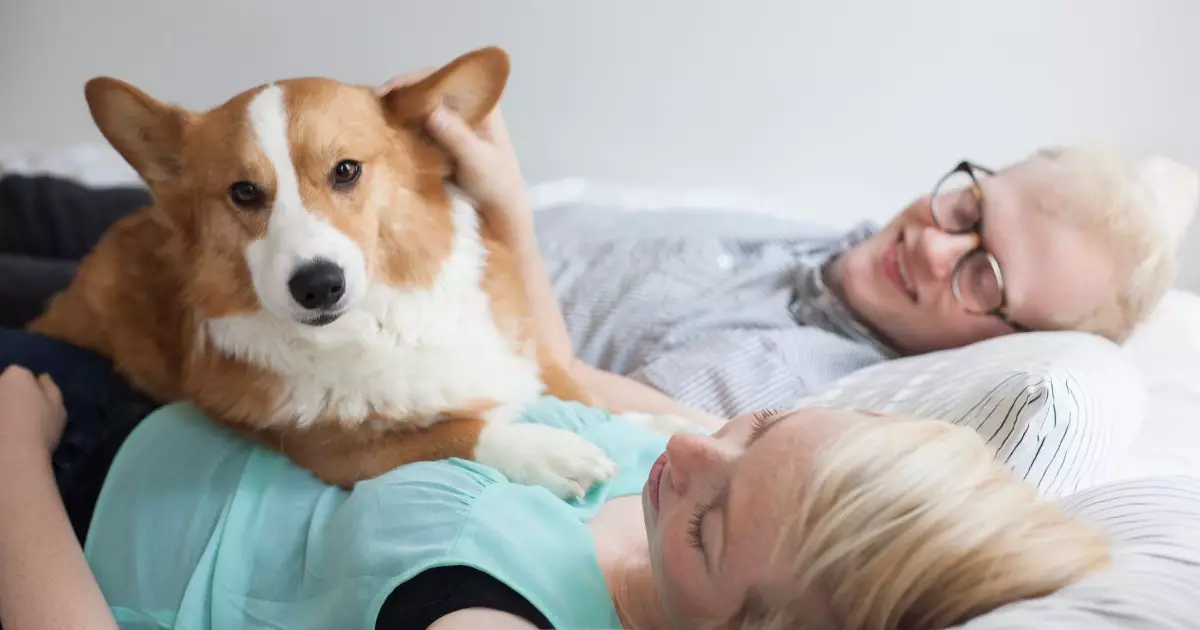
Can dogs feel jealousy? If you’ve ever hugged your partner only to have your dog wedge their body between you, paw at your arm, or demand attention at the exact wrong moment, you’ve probably wondered whether your dog is experiencing jealousy—or simply behaving opportunistically.
Research suggests the answer is more nuanced than a simple yes or no. Dogs may not experience jealousy exactly as humans do, but mounting evidence shows they respond strongly when their social bond with a valued person feels threatened. Understanding canine jealousy requires looking at attachment, social cognition, and instinct—not projecting human emotions wholesale onto dogs, but also not dismissing their emotional depth.
This article breaks down what science actually tells us about canine jealousy, what behaviors are often mistaken for jealousy, how to interpret them correctly, and how to manage attention-seeking or rival-like behaviors in a healthy, humane way.
What People Mean When They Say “My Dog Is Jealous”
In everyday language, dog owners use the word jealous to describe behaviors like:
-
Pushing between people who are hugging
-
Barking when attention is given to another dog
-
Nudging hands away from a phone, baby, or partner
-
Growling when another pet approaches the owner
-
Becoming clingy or disruptive when routines change
From a behavioral standpoint, these actions are not random. They happen in predictable contexts involving attention, attachment, and perceived competition.
The key question is whether these behaviors reflect a true emotional state comparable to human jealousy—or whether they are driven by simpler motivations such as learned behavior, anxiety, or resource guarding.
The Study That Sparked the Conversation About Canine Jealousy
One of the most cited studies on canine jealousy was published in PLOS ONE and conducted by researchers at the University of California, San Diego. The experiment was designed to test whether dogs react differently when their owner shows affection to a perceived rival.
How the Study Worked
Researchers observed dogs while their owners interacted with:
-
A realistic stuffed dog that barked and wagged its tail
-
A neutral object (like a book)
-
A novelty item (a jack-o’-lantern)
The dogs’ behaviors were carefully recorded while the owner ignored them and focused on the other “target.”
What the Researchers Observed
A large percentage of dogs:
-
Attempted to interrupt the interaction
-
Pushed or wedged themselves between the owner and the object
-
Snapped or growled at the stuffed dog
-
Showed increased attention-seeking behaviors
Notably, these reactions occurred far more often with the stuffed dog than with inanimate objects.
Why These Findings Matter
The results suggest dogs are not just reacting to ignored attention—they are responding differently when the perceived rival appears social or alive. This distinction is important.
From a behavioral science perspective, this points to:
-
Social awareness
-
Attachment-based responses
-
Recognition of competition for attention
Christine Harris, the study’s lead author, proposed that these behaviors resemble a primitive form of jealousy—specifically, a response to a threat to a valued social bond.
The Skeptical View: Are We Over-Interpreting Dog Behavior?
Not all experts agree that the study proves jealousy.
Some researchers argue that:
-
Dogs may simply be reacting to novelty or uncertainty
-
The stuffed dog may have triggered fear or confusion
-
The behaviors could reflect learned attention-seeking rather than emotion
Critics emphasize an important point: we cannot directly measure internal emotional states in dogs. We infer emotions based on behavior, context, and consistency.
That doesn’t invalidate the findings—but it does caution against anthropomorphizing too quickly.
A More Accurate Framework: Attachment, Not Human-Style Jealousy
To understand what’s happening, it helps to shift away from human emotional labels and toward attachment theory.
Dogs form strong attachment bonds with their caregivers. These bonds:
-
Provide safety and predictability
-
Influence stress responses
-
Shape social behavior
When attention is redirected to a perceived rival—another dog, a baby, a partner—some dogs experience attachment disruption.
This can trigger behaviors that look like jealousy but are more accurately described as:
-
Social stress
-
Fear of loss of access
-
Uncertainty about status or attention
In other words, dogs are not thinking, “I resent this other being.”
They are responding to, “Something important to me just changed.”
Behaviors Commonly Associated With Canine Jealousy
1. Blocking or Inserting Themselves
Dogs that wedge themselves between people or pets are attempting to re-establish proximity and attention—not necessarily to dominate.
This is especially common in:
-
Dogs with strong one-person bonds
-
Dogs with insecure attachment styles
-
Dogs experiencing recent routine changes
2. Attention-Seeking Escalation
Barking, pawing, whining, or nudging often increase when:
-
Owners pet another dog
-
Owners focus on phones or babies
-
Guests receive attention
These behaviors are frequently reinforced unintentionally when owners respond—even negatively.
3. Resource Guarding of People
In some dogs, jealousy-like behavior overlaps with resource guarding, where the “resource” is human attention.
Signs include:
-
Growling when another pet approaches the owner
-
Stiff body language during shared affection
-
Snapping if boundaries are crossed
This requires careful management and, in some cases, professional support.
Which Dogs Are More Likely to Show Jealousy-Like Behaviors?
Research and clinical observation suggest higher likelihood in:
-
Dogs with strong attachment to one person
-
Dogs lacking early socialization
-
Dogs with anxiety or insecurity
-
Dogs that have been reinforced for attention-seeking
-
Dogs experiencing major life changes
Breed alone is not a reliable predictor, though companion-oriented breeds may show behaviors more visibly.
What Canine Jealousy Is Not
It’s important to clarify what these behaviors do not mean.
They do not indicate:
-
Spite
-
Manipulation
-
Moral failing
-
A desire to control humans
Dogs are responding instinctively to perceived social changes—not plotting or resenting.
How to Respond Without Making the Behavior Worse
Avoid Punishment or Scolding
Punishing a dog for jealousy-like behaviors:
-
Increases anxiety
-
Damages trust
-
Can escalate guarding behavior
Negative responses confirm the dog’s fear that attention is being withdrawn.
Reinforce Calm, Neutral Behavior
Instead:
-
Reward calm presence during shared attention
-
Praise relaxed body language
-
Ignore attention-seeking when safe to do so
Consistency matters more than intensity.
Teach Predictability Around Attention
Dogs cope better when attention feels predictable.
Helpful strategies include:
-
Structured one-on-one time daily
-
Clear routines for play and affection
-
Teaching “place” or “settle” cues during interactions
This reassures dogs they won’t lose access entirely.
Managing Jealousy in Multi-Dog Households
In homes with multiple dogs, jealousy-like behaviors are especially common.
Best practices include:
-
Feeding dogs separately if tension exists
-
Avoiding forced group affection
-
Rotating individual attention fairly
-
Supervising interactions during high-arousal moments
Fair does not mean equal—it means appropriate to each dog’s needs.
Jealousy vs. Aggression: Knowing the Difference
Jealousy-like behaviors become concerning when they escalate into aggression.
Red flags include:
-
Freezing or stiffening during attention sharing
-
Hard staring or lip lifting
-
Growling that does not resolve with distance
At this point, professional guidance from a qualified trainer or behaviorist is strongly recommended.
Can You Prevent Jealousy From Developing?
You can reduce the likelihood by:
-
Socializing puppies to shared attention early
-
Avoiding reinforcing pushy behaviors
-
Teaching impulse control
-
Maintaining predictable routines
Prevention is easier than correction—but change is still possible in adult dogs.
What This Research Tells Us About Dogs Emotionally
The canine jealousy discussion highlights something important: dogs are emotionally complex social beings.
They:
-
Form attachments
-
Respond to social threats
-
Adjust behavior based on relationships
They may not feel jealousy exactly as humans do—but dismissing their emotional responses entirely misses the point.
Frequently Asked Questions About Canine Jealousy
Do dogs feel jealousy like humans?
Dogs likely experience a simpler, attachment-based version rather than complex human jealousy.
Is jealousy a bad thing?
Not inherently. It becomes problematic only when it leads to stress or aggression.
Should I give in to jealous behavior?
No. Calm reinforcement and structure work better than rewarding pushiness.
Can training help?
Yes—especially impulse control, relaxation, and confidence-building exercises.
Final Thoughts: Rethinking “Jealousy” in Dogs
Unpacking canine jealousy isn’t about proving dogs feel human emotions. It’s about understanding how deeply they value social bonds—and how they react when those bonds feel uncertain.
When we interpret these behaviors through the lens of attachment, stress, and learning—not judgment—we respond more effectively. The result is a calmer dog, a stronger bond, and fewer misunderstandings.
Dogs don’t need us to label their emotions perfectly. They need us to respond thoughtfully, consistently, and with empathy.
