
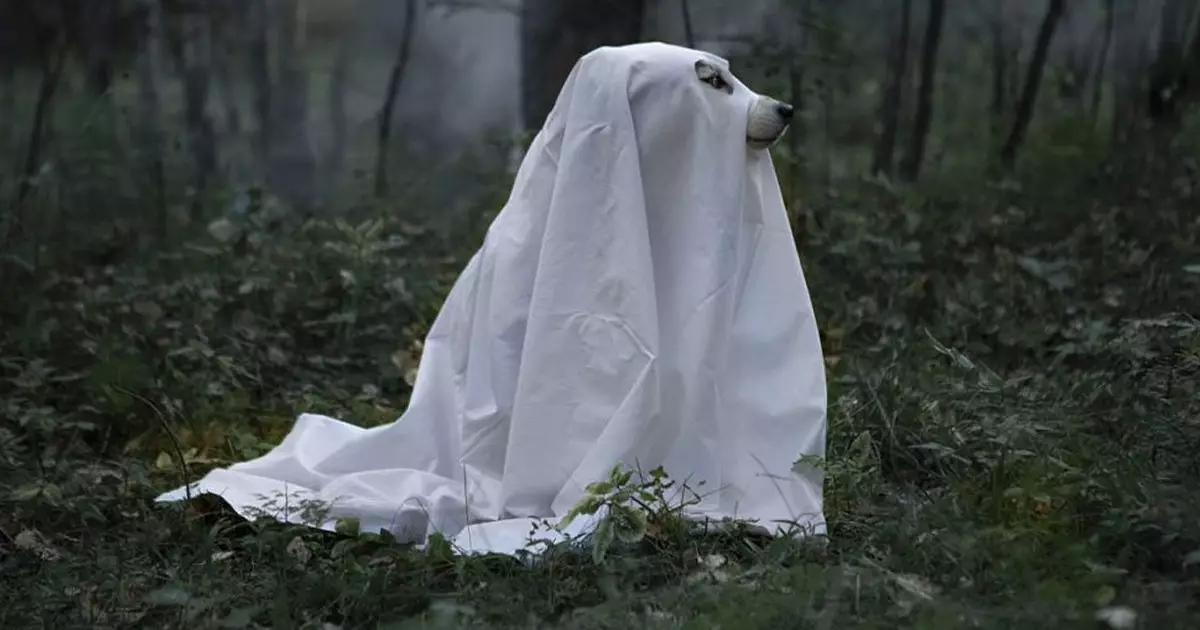
Can dogs see ghosts? It’s a question many dog owners ask after watching their pet stare intently at an empty corner, bark at nothing visible, or react to a space that feels perfectly ordinary to us. The short, honest answer is this: there is no scientific evidence that dogs can see ghosts—or that ghosts exist at all. However, dogs do experience the world through senses far more powerful than ours, and those heightened abilities can easily explain behaviors that feel supernatural.
This article explores what science, veterinary behaviorists, and canine sensory research actually tell us. We’ll separate myth from measurable reality, explain why dogs sometimes behave in ways that feel paranormal, and help you understand when unusual behavior is normal—and when it might signal a health or anxiety issue worth addressing.
Why the Idea That Dogs See Ghosts Is So Persistent
The belief that dogs can see ghosts is not new. Across cultures and centuries, animals—especially dogs—have been credited with sensing things humans cannot. In folklore, dogs were often portrayed as guardians between worlds, capable of detecting spirits, danger, or unseen forces.
Today, the belief persists for one simple reason: dogs frequently react to stimuli humans cannot perceive. When we lack a clear explanation, the mind fills in the gap.
Animal behaviorist Mary Burch has noted that interpretation plays a major role. Owners who already believe in the supernatural are more likely to label unexplained canine behavior as paranormal. Those who don’t tend to look for environmental or biological explanations instead.
The behavior is the same. The meaning we assign to it is not.
What Dogs Actually Experience: A Sensory World Humans Don’t Share
To understand why dogs sometimes appear to react to “nothing,” you have to understand how different their sensory world is from ours.
Dogs Hear What We Cannot
Dogs hear frequencies up to roughly 65,000 Hz, compared to the human limit of about 20,000 Hz. That means:
-
Electrical currents in walls
-
High-pitched appliance noises
-
Distant wildlife
-
Subtle structural sounds in buildings
…can all be audible to a dog while remaining completely silent to us.
A dog staring at a hallway may not be sensing a spirit—it may be tracking a sound source you physically cannot hear.
Dogs Smell the Invisible
A dog’s sense of smell is estimated to be 10,000 to 100,000 times more sensitive than a human’s. Dogs don’t just smell odors; they detect changes in scent.
Veterinarian Aramendi has explained that dogs can detect residual scents long after a person has left a space. Hormones, emotional stress markers, and environmental changes all leave chemical traces.
A dog reacting to an “empty” room may actually be responding to:
-
A lingering human scent
-
Wildlife activity in walls or ceilings
-
Changes in air pressure or airflow
-
Mold or environmental allergens
To us, the room is empty. To the dog, it is full of information.
Dogs See Differently Than Humans
Dogs don’t see the world as sharply as humans, but they excel at detecting movement, especially in low light.
They are more sensitive to:
-
Shadows
-
Flickering light
-
Reflections
-
Subtle motion changes
A shifting shadow from passing headlights or tree branches can easily trigger focused attention or barking.
The “Staring at Nothing” Behavior Explained
One of the most common reasons people believe dogs see ghosts is prolonged staring into space. While unsettling, this behavior has well-documented explanations.
Common Non-Paranormal Causes
-
Tracking distant or high-frequency sounds
-
Watching dust, insects, or light patterns
-
Responding to smells carried by airflow
-
Mild anxiety or hypervigilance
-
Cognitive changes in senior dogs
In older dogs, staring can sometimes be linked to canine cognitive dysfunction, a condition similar to dementia. If staring is frequent, paired with disorientation, or accompanied by sleep disruption, a veterinary consultation is important.
Do Dogs Have a “Sixth Sense”?
Many owners describe dogs as having intuition—a sense that goes beyond sight, sound, or smell. While there is no scientific evidence for extra-sensory perception (ESP) in dogs, there is strong evidence that dogs are exceptional at reading patterns.
Dogs are highly attuned to:
-
Human body language
-
Emotional changes
-
Routine disruptions
-
Environmental shifts
Behaviorist Jill Villarreal emphasizes that dogs respond to micro-signals humans don’t consciously notice. A dog reacting “out of nowhere” may be responding to a change you didn’t realize you expressed.
This ability often gets labeled as a “sixth sense,” when it is actually advanced pattern recognition.
Why Dogs React Strongly at Night
Many reports of “ghost sensing” happen after dark. There are practical reasons for this.
At night:
-
Ambient noise decreases, making subtle sounds more noticeable
-
Shadows and reflections increase
-
Human anxiety levels are often higher
-
Dogs are more alert to potential threats
Dogs are crepuscular by nature, meaning they are most alert at dawn and dusk. Nighttime vigilance is normal, not paranormal.
Emotional Contagion: When Dogs Reflect Human Fear
Dogs are extremely sensitive to human emotion. If you feel uneasy in a space, your dog may react—not to the environment, but to you.
Signs a dog is responding to human anxiety include:
-
Checking back at the owner frequently
-
Whining or pacing
-
Staying physically close
-
Increased alertness without a clear trigger
This feedback loop can reinforce the belief that something supernatural is happening, when in reality the dog is responding to subtle emotional cues.
When “Seeing Ghosts” Might Actually Be a Health Issue
While most unexplained behaviors are harmless, some warrant medical attention.
Seek Veterinary Advice If You Notice:
-
Sudden personality changes
-
Persistent staring or freezing
-
Disorientation or confusion
-
Unexplained fear or aggression
-
Changes in sleep-wake cycles
Neurological issues, vision changes, anxiety disorders, and age-related cognitive decline can all produce behaviors mistaken for supernatural awareness.
Always rule out medical causes first.
Why Science Does Not Support the Idea That Dogs See Ghosts
Science relies on measurable, repeatable evidence. To date:
-
There is no verified evidence ghosts exist
-
There is no mechanism explaining how animals would perceive them
-
All observed behaviors have plausible sensory or neurological explanations
That doesn’t make the experiences meaningless—but it does mean they don’t require a supernatural explanation.
Why the Belief Still Matters to People
Even without scientific backing, the belief that dogs can sense more than we can speaks to something deeply human: our desire for connection, meaning, and reassurance.
Dogs already:
-
Detect illness
-
Anticipate seizures
-
Respond to emotional distress
-
Sense environmental danger
They don’t need supernatural abilities to be extraordinary.
How to Respond When Your Dog Acts “Paranormal”
If your dog stares, barks, or reacts to unseen stimuli:
-
Stay calm – Your reaction influences theirs
-
Observe patterns – Time, location, triggers
-
Check the environment – Sounds, light, airflow
-
Rule out medical issues
-
Provide reassurance, not reinforcement
Avoid reacting with fear or excitement, which can reinforce anxious behavior.
Frequently Asked Questions
Can dogs really see ghosts?
There is no scientific evidence that dogs can see ghosts. Their behavior is best explained by heightened senses and pattern recognition.
Why does my dog bark at empty spaces?
Dogs often hear or smell stimuli humans cannot detect, such as distant sounds or lingering scents.
Do dogs sense spirits after death?
There is no evidence supporting this belief. Dogs may react to emotional changes in grieving owners or altered routines.
Is my dog afraid of something supernatural?
Fearful behavior usually reflects anxiety, environmental triggers, or health changes—not paranormal awareness.
Should I worry if my dog stares into space?
Occasional staring is normal. Frequent or sudden changes should be evaluated by a veterinarian.
Final Thoughts: Mystery Without the Myth
Dogs don’t need to see ghosts to be remarkable. Their world is already richer, louder, and more detailed than ours in ways we’re only beginning to understand.
What feels supernatural is often sensory brilliance meeting human imagination.
By understanding how dogs truly experience their environment, we replace fear with insight—and deepen the bond built not on mystery, but on trust, care, and knowledge.
