
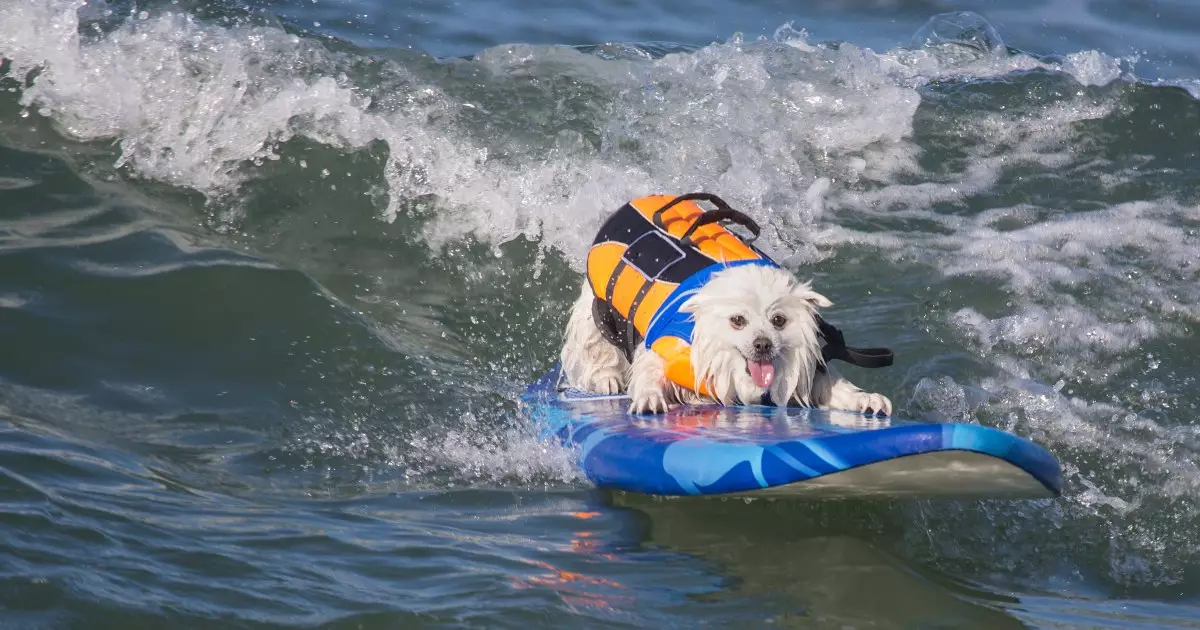
Dog surfing competitions are exactly what they sound like: organized sporting events where dogs ride real ocean waves on surfboards, judged on balance, confidence, and control. What began as a playful beach novelty has evolved into a structured, safety-focused sport with dedicated athletes—both canine and human—and a growing global following. If you’ve ever wondered how dog surfing works, whether it’s safe, or why it’s become so popular, this guide breaks it all down clearly and honestly.
From iconic California beaches to international coastlines, dog surfing competitions celebrate athleticism, trust, and the unique bond between dogs and their handlers. At the heart of the movement are established events like the Purina Pro Plan Incredible Dog Challenge, which helped bring legitimacy, structure, and visibility to canine surf sports.
What Is a Dog Surfing Competition?
A dog surfing competition is a formally organized event where dogs ride surfboards on ocean waves—either alone or with a handler—while being evaluated by judges. Scoring typically considers:
-
Balance and stability on the board
-
Confidence and composure in moving water
-
Control throughout the ride
-
Wave quality and ride duration
-
Overall impression and teamwork
These events are not improvised stunts. They follow clear safety protocols, require protective gear, and are overseen by experienced trainers, water safety teams, and lifeguards. Dogs are never forced to participate, and positive reinforcement is the foundation of all training and competition standards.
While surfing is the headline attraction, many competitions are part of broader canine athletic showcases that also include agility, dock diving, freestyle disc, and speed challenges. Together, these disciplines highlight what dogs are capable of when training prioritizes health, trust, and enjoyment.
Where Dog Surfing Competitions Take Place
Dog surfing competitions are most commonly held in coastal locations with consistent, manageable waves and strong water safety infrastructure. In the United States, Southern California has become the sport’s epicenter.
Huntington Beach: The Iconic Home of Dog Surfing
Few places are as closely associated with dog surfing as Huntington Beach. Known for its surf culture and reliable breaks, Huntington Beach provides ideal conditions for canine surfers and spectators alike.
Events here draw thousands of attendees each year. Dogs of many breeds and sizes compete under close supervision, with handlers nearby and lifeguards in the water at all times. Mandatory life jackets, soft-top boards, and strict wave limits help keep the environment controlled and safe.
Beyond competition, these events feel more like festivals. Families line the shore, cheering for every ride—whether it lasts three seconds or an entire wave. The emphasis is on participation and partnership, not perfection.
How Dog Surfing Competitions Are Judged
Although judging criteria vary slightly by event, most dog surfing competitions follow similar principles. Judges are typically experienced trainers, surfers, or canine sports professionals.
Common Judging Criteria
-
Confidence: Does the dog appear relaxed and willing, or tense and uncertain?
-
Balance: Can the dog maintain stable footing as the board moves?
-
Control: Does the dog stay centered and ride the wave intentionally?
-
Wave Selection: Is the wave appropriate for the dog’s size and skill level?
-
Teamwork: In tandem categories, how well do dog and handler move together?
Importantly, dogs are never penalized for ending a ride early. Jumping off the board safely is considered a positive choice, not a failure.
The Community Behind Dog Surfing
One of the most overlooked aspects of dog surfing competitions is the community. While there are winners and rankings, the culture is collaborative rather than cutthroat.
Handlers routinely share training techniques, board recommendations, and safety tips. Newcomers are welcomed, not sidelined. Many participants return year after year, forming friendships that extend beyond the beach.
For families, these competitions often become annual traditions—part sporting event, part reunion, part celebration of life with dogs.
From Rescue to Surf Star: Real Stories From the Waves
Some of the most memorable competitors in dog surfing history didn’t come from elite breeding programs. They came from shelters.
Rescue dogs with a natural love of water often excel in the sport. One widely known competitor—frequently referred to by fans as a “surfing queen”—was adopted from a shelter before discovering her talent for riding waves. With patient, reward-based training, she went on to compete successfully for years.
Her handler has repeatedly emphasized that the goal was never trophies. The real success was confidence, joy, and trust. Even after retirement, her story continues to inspire dog owners who are curious about water sports but unsure where to begin.
These stories reinforce a central truth of dog surfing: performance matters far less than partnership.
What Makes a Dog Well-Suited for Surfing?
Not every dog will enjoy surfing, and that’s perfectly fine. Success in dog surfing competitions depends more on temperament than breed.
Traits That Matter Most
-
Comfort in water: Strong swimming ability is essential.
-
Calm temperament: Dogs must tolerate crowds, noise, and movement.
-
Balance and coordination: Helpful for staying centered on the board.
-
Physical fitness: Core strength and endurance support safe rides.
-
Trust in the handler: Clear communication reduces stress.
Breeds commonly seen include Labradors, Golden Retrievers, Portuguese Water Dogs, and athletic mixed breeds. However, dogs of many sizes and backgrounds participate successfully when training aligns with their abilities and comfort level.
How Dogs Are Trained for Surfing
Training for dog surfing competitions is gradual, methodical, and entirely positive. Dogs are never pushed into waves or forced onto boards.
Step-by-Step Training Foundations
-
Water confidence first
Dogs must be comfortable swimming in calm water before anything else. -
Obedience basics
Reliable “stay,” “come,” and focus cues are essential. -
Balance training on land
Boards are introduced on stable ground to build familiarity. -
Board movement simulation
Gentle rocking helps dogs adapt to motion. -
Shallow water practice
Initial rides happen close to shore with minimal wave action. -
Gradual progression
Only when a dog shows consistent confidence do they advance.
Positive reinforcement—treats, praise, and play—is the only acceptable training method. Stress signals are respected immediately.
Essential Safety Equipment
-
Properly fitted canine life jacket
-
Soft-top or foam surfboard
-
Non-slip board surface
-
Calm water conditions for beginners
-
Experienced supervision at all times
Working with a trainer who has water sport experience is strongly recommended, especially for first-time teams.
Is Dog Surfing Safe?
When done responsibly, dog surfing can be safe and enriching. When done irresponsibly, it can be dangerous. The difference lies in preparation, supervision, and respect for the dog’s limits.
Safety Principles That Matter
-
Dogs should never be tethered to boards
-
Heat and fatigue are closely monitored
-
Sessions are short with frequent breaks
-
Participation is always voluntary
Dogs with joint disease, heart conditions, respiratory issues, or anxiety around water are not good candidates. A veterinarian should always be consulted before beginning any physically demanding activity.
Why Dog Surfing Competitions Keep Growing
Dog surfing competitions continue to gain popularity because they align with how modern dog owners think about enrichment. These events aren’t about forcing tricks or chasing ribbons—they’re about shared experiences.
They also challenge outdated assumptions about canine capability. Watching a dog confidently ride a wave reshapes how people think about trust, training, and the emotional lives of animals.
For many handlers, the greatest reward isn’t applause. It’s watching their dog light up with confidence while doing something genuinely enjoyable.
Dog Surfing vs. Other Canine Water Sports
Dog surfing is often compared to dock diving or swimming, but it’s fundamentally different.
-
Dock diving focuses on explosive power and distance.
-
Swimming emphasizes endurance and retrieval.
-
Surfing requires balance, calmness, and adaptability.
Each sport appeals to different dogs. Surfing tends to attract dogs that enjoy problem-solving and steady movement rather than high-impact bursts.
Common Misconceptions About Dog Surfing
“Dogs are forced to surf.”
Reputable competitions do not allow coercion. Dogs that show discomfort are withdrawn immediately.
“Only certain breeds can do it.”
Temperament matters more than breed. Mixed breeds frequently excel.
“It’s just a gimmick.”
Structured competitions with safety standards and judging criteria demonstrate otherwise.
“Dogs don’t enjoy it.”
Dogs that compete successfully show clear signs of enthusiasm and engagement.
Frequently Asked Questions About Dog Surfing Competitions
Can any dog learn to surf?
No. Dogs must enjoy water, tolerate stimulation, and show interest. Many dogs are happiest staying on shore.
Do dogs surf alone or with handlers?
Both. Competitions often include solo and tandem categories.
Is dog surfing stressful for dogs?
It shouldn’t be. Training is slow, voluntary, and reward-based. Stress signals are respected.
Do dogs need special equipment?
Yes. A canine life jacket and appropriate board are mandatory.
Where can I watch dog surfing competitions?
Major events like the Purina Pro Plan Incredible Dog Challenge are held annually and often covered by media outlets, especially when hosted in places like Huntington Beach.
Final Thoughts: Why Dog Surfing Resonates
Dog surfing competitions endure because they represent something simple and powerful: trust in motion. They show what’s possible when training respects the dog as a partner, not a prop.
Whether you’re watching from the sand or considering introducing your own dog to the water, the appeal is easy to understand. At its best, dog surfing isn’t about waves or scores. It’s about connection—one ride at a time.

- Empowering Solutions for Involuntary Urination in Dogs - January 1, 2026
- Unleashing the Power of Farm Dogs: The Unsung Heroes of the Countryside - January 1, 2026
- The Unforgettable Charm of Animated Dog Movies: A Journey of Friendship and Adventure - January 1, 2026